Damaged and drained, Indonesia's peatlands go up in smoke
Burning slowly, mostly under the surface and sometimes for months on end, peatland fires are responsible for much of the dry season haze that this year has tainted air as far afield as Malaysia, Singapore and the Philippines.
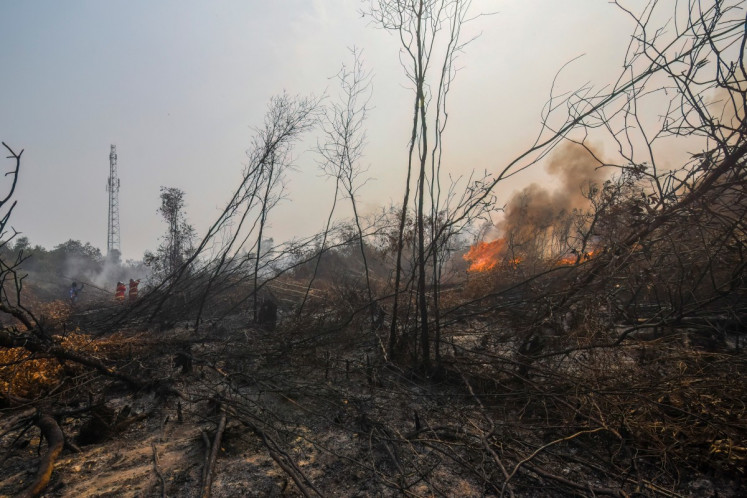
Indonesia's peatlands, severely damaged and drained, have been engulfed in flames, contributing to the thick haze that has spread far beyond the country's borders. These fires, which burn slowly and often for months, are primarily responsible for the persistent dry season haze affecting nations like Malaysia, Singapore, and the Philippines.
Peatlands, composed of organic material that remains partially decomposed due to water-logged conditions, are crucial for flood control and store a significant amount of soil carbon, accounting for about a third of the world's total. However, Indonesia harbors the largest share of tropical peatland, amounting to approximately one-third of the global total.
The destruction of these peatlands is largely due to industrial-scale plantations, rice paddies, and palm oil production, which have led to the drainage of these areas, exposing them to the risk of burning, particularly during severe droughts caused by El Nino years. While less than a third of wildfires in Indonesia occur on peatlands, they are responsible for the majority of the haze, containing harmful elements such as formaldehyde, hydrogen cyanide, ammonia, and PM2.5 particles, which can penetrate deep into the respiratory system.
The health impacts of this toxic smog have been severe, with hundreds of schools in Indonesia closing and over 170,000 people requiring respiratory treatment in August and September alone. Furthermore, the fires have devastating effects on wildlife habitats, exacerbating the plight of endangered species like orangutans and Sumatran rhinos.
In October 6, Indonesian wildfires released 140.5 megatons of carbon, representing 13 percent of the global total for that year, the highest figure since 2019, another strong El Nino year. Indonesia's coal-powered electricity grid also contributes to significant greenhouse gas emissions, prompting activists and experts to call for the revocation of concession licenses for extractive activities on peatlands and the rewetting and replanting of native species.
Despite Indonesia's moratorium on new permits for primary forest and peatland clearance, the government's recent actions have raised doubts about the effectiveness of these efforts.
Written by urgent.news from The Jakarta Post's reporting — not their text. Machine-written — may contain errors; check the original before relying on it.