France’s angry youth are demanding a future – not just better schools
Last week, on my way through the Latin Quarter, a neighbourhood in Paris, I passed the gates of Lycee Henri-IV. It is one of the most elite schools in France, the kind of place that produces philosophers, scientists and presidents – the equivalent of getting into Harvard or Yale universities, but for high-school students. A cluster of teenagers in hoodies stood outside holding signs. They were…
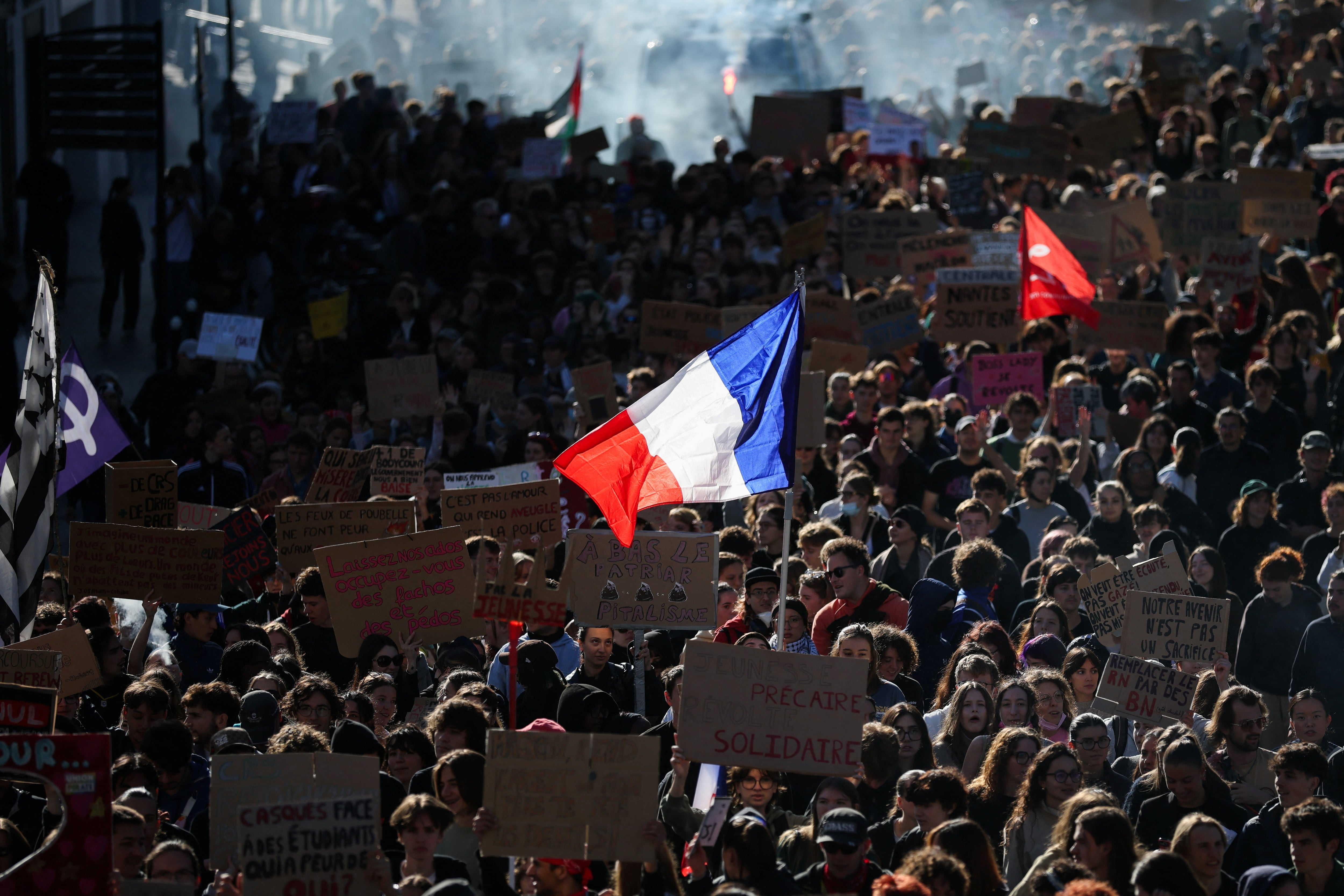
Last week, teenagers in Paris took to the streets, demanding a future, not just better schools. Located in the Latin Quarter, Lycee Henri-IV is one of France's elite schools, producing high-achieving students. French youth are angry, standing outside holding signs, expressing their annoyance. They are old enough to face violence, yet they are old enough to be heard. Violence has not reached this wealthy neighborhood, but students at other schools have joined in solidarity, demanding change.
The protests began at Lycee Saint-Exupery in Creteil, and soon spread to other schools in Ile-de-France, followed by Marseille, Lille, Rennes, and Strasbourg. As days pass, students' demands have grown, shifting from resource shortages in public schools to a sense of being unheard and inheriting a dysfunctional world. Watching young people protest in various cities, I have seen successful protests like the ones that overthrew Slobodan Milosevic in Belgrade.
The causes behind the French protests are unemployment, discrimination, and broken relations with the police.
France has a history of protests, dating back to the French Revolution, and taking to the streets is considered a civic duty. This latest movement embarrasses the government, with 1,027 lycees affected, 222 of them blockaded. Bins burned in Toulouse and Rennes, tear gas in Strasbourg and Lille, and a school in Nantes was firebombed.
More than 400 schools were closed the following day, and over 2,000 people have been arrested, mostly minors. The government's response includes condemnation, crisis meetings, and protest bans outside closed schools.
The timing of the protests coincides with a presidential election, and Prime Minister Sebastien Lecornu attributes the unrest to La France Insoumise, a hard-left party. Manuel Bompard of LFI denies the allegations and was tear-gassed for protecting students. The National Rally, a far-right party, is on the rise, and their presidential candidate, Jordan Bardella, is poised to take over the Elysee Palace.
The government unveiled a budget built on spending cuts and tax rises, which the students did not miss, particularly as most French people struggle with the high cost of living. The protests are expected to be put down soon, but it remains to be seen who benefits most from this unrest.
Written by urgent.news from The National Business's reporting — not their text. Machine-written — may contain errors; check the original before relying on it.
This story
This is one outlet's version. Read the fullest account.
- France’s angry youth are demanding a future – not just better schools thenationalnews.com