France’s angry youth are demanding a future – not just better schools
Last week, on my way through the Latin Quarter, a neighbourhood in Paris, I passed the gates of Lycee Henri-IV. It is one of the most elite schools in France, the kind of place that produces philosophers, scientists and presidents – the equivalent of getting into Harvard or Yale universities, but for high-school students. A cluster of teenagers in hoodies stood outside holding signs. They were…
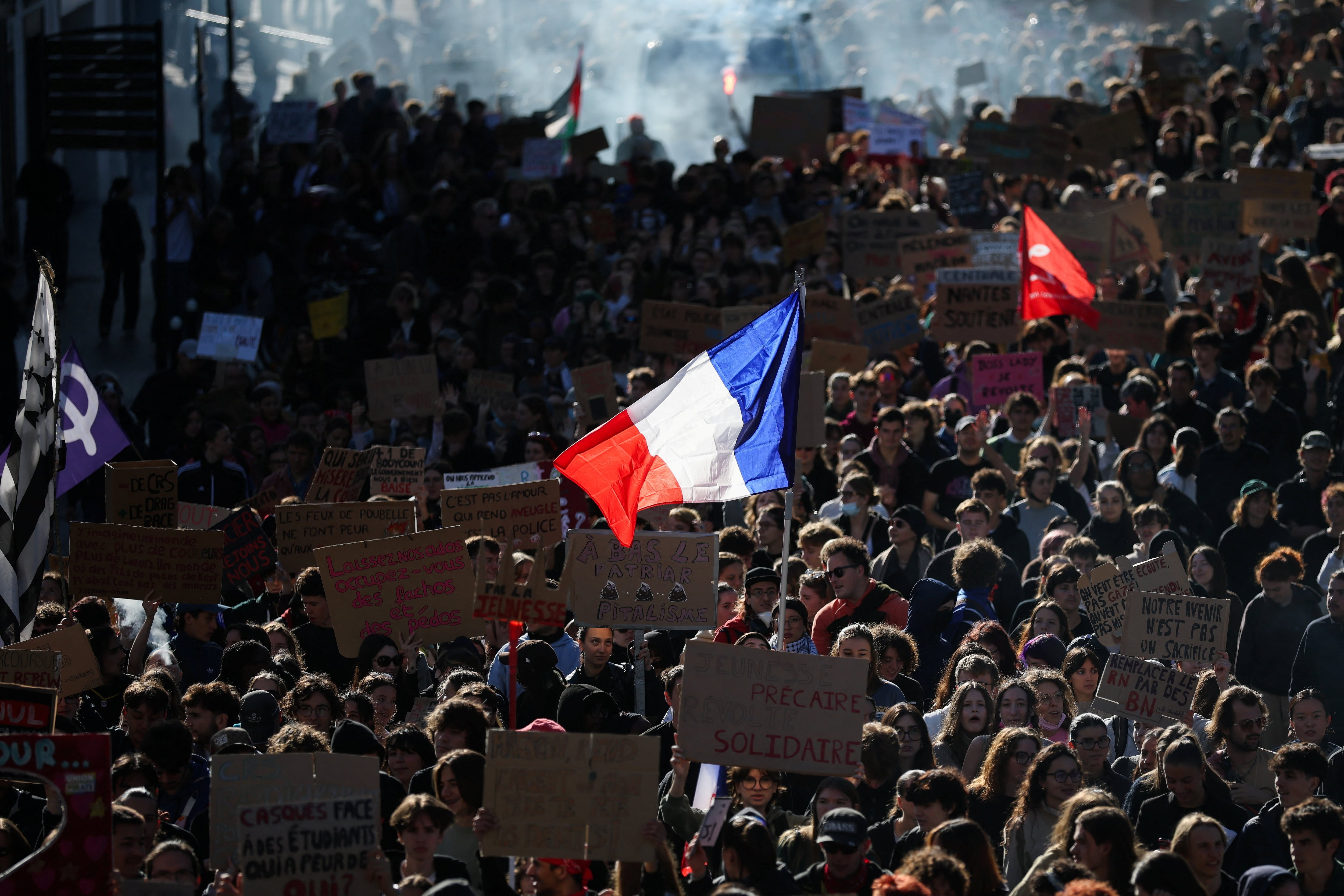
In the Latin Quarter of Paris, teenagers in hoodies gathered with placards, expressing their frustration in the streets. The unrest spread to schools like Lycee Henri-IV, where elite students protested against the use of violence against them. The movement expanded to Institut Catholique, a Catholic school, where students marched in solidarity with those in Paris, asking for a future where their concerns are heard and addressed.
The protests started at Lycee Saint-Exupery in Creteil and soon gathered momentum across various regions, including Marseille, Lille, Rennes, and Strasbourg. Initially, the demands were centered around inadequate resources in public schools, such as teacher shortages, overcrowded classes, and substandard facilities. However, as the movement evolved, the students' message shifted to encompass a broader sense of disillusionment and a plea for a better world that they are inheriting.
Having witnessed student protests across the globe, the correspondent observed that the French have a unique tradition of dissent, which dates back to the French Revolution. The current movement has some similarities to past movements, such as the riots in Belgrade during the overthrow of Slobodan Milosevic and the student-led protests in France in 2005, which were triggered by the electrocution of two teenagers and later escalated into widespread unrest.
The French government's response to the protests has been predictable, with condemnation, crisis meetings, and attempts to ban protests near closed schools. The prime minister, Sebastien Lecornu, accused the movement of being orchestrated by La France Insoumise, a hard-left political party, while the opposition party, National Rally, saw an opportunity to capitalize on the situation.
With President Emmanuel Macron barred from running for re-election due to constitutional limits, the National Rally believes they have a chance to seize power.
The timing of the budget announcement, which included spending cuts and tax increases, did not go unnoticed by the protesting students. They are particularly frustrated with the high cost of living, as salaries in France are lower compared to cities like Manhattan or London. As the protests continue, it remains to be seen who will benefit most from this unrest and whether the far-right National Rally will capitalize on the situation to gain a significant advantage in the upcoming presidential election.
Written by urgent.news from The National UAE's reporting — not their text. Machine-written — may contain errors; check the original before relying on it.
Also reported by 1 other outlet
- France’s angry youth are demanding a future – not just better schools thenationalnews.com