As sand becomes more valuable, Sierra Leone’s Mahera Coast grows more vulnerable
PORT LOKO, Sierra Leone — When the tide pulls away from the beach in the agricultural regions in Mahera in Lungi, about 27 kilometers (17 miles) across the sea from the country’s capital, Freetown, the digging commences. Young men shovel sand into cement bags and carry them to a flat open area to pile sand […]
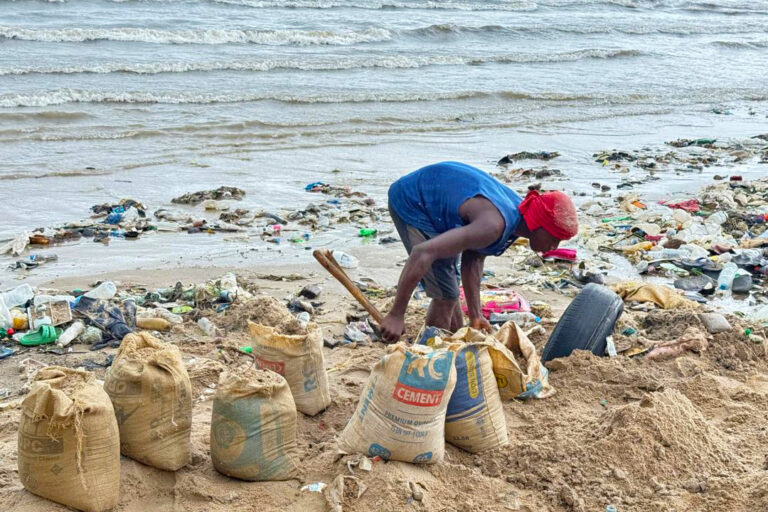
Port Loko, Sierra Leone — As the tide recedes from the beach in the agricultural areas of Mahera in Lungi, roughly 17 miles offshore from the nation's capital of Freetown, the process of extracting sand begins. A group of young men utilizes shovels to gather sand into portable containers, which they then transport to a flat, open area where they pile the sand into large mounds to be purchased by local women.
These women are known for their expertise in selling sand to heavy-duty truck drivers, who transport the commodity to Lungi, Port Loko, and other destinations. The earnings from this labor allow these women to provide for their families, funding necessities such as food, education, and essential supplies. However, their occupation is dependent on the natural cycle of the tide.
During low tide, they have ample time to gather sand, but during high tide, they are prohibited from doing so. The commercialization of sand in Mahera started as a means for survival for 14 women who became the primary earners for their families, often due to the loss of their partners. Aminata Kargbo, the chairperson of the sand sellers in the Mahera area, joined the trade after her husband's death to support her seven children.
She leads approximately 19 women who are involved in this trade. Many of these women are widows, who lost their husbands to Sierra Leone's civil war (1991-2002) and various health issues. Aminata Kargbo oversees the operations of her fellow sand sellers.
Written by urgent.news from Mongabay's reporting — not their text. Machine-written — may contain errors; check the original before relying on it.