AI can aid faster, cost-effective diagnosis but clinical validation and data safeguards needed: experts
The discussion on ‘Artificial Intelligence-Driven Healthcare: Innovation, Ethics, Accessibility and Sustainability’ was held as part of The Hindu’s Sustainability Dialogues 2026, presented by SIMATS
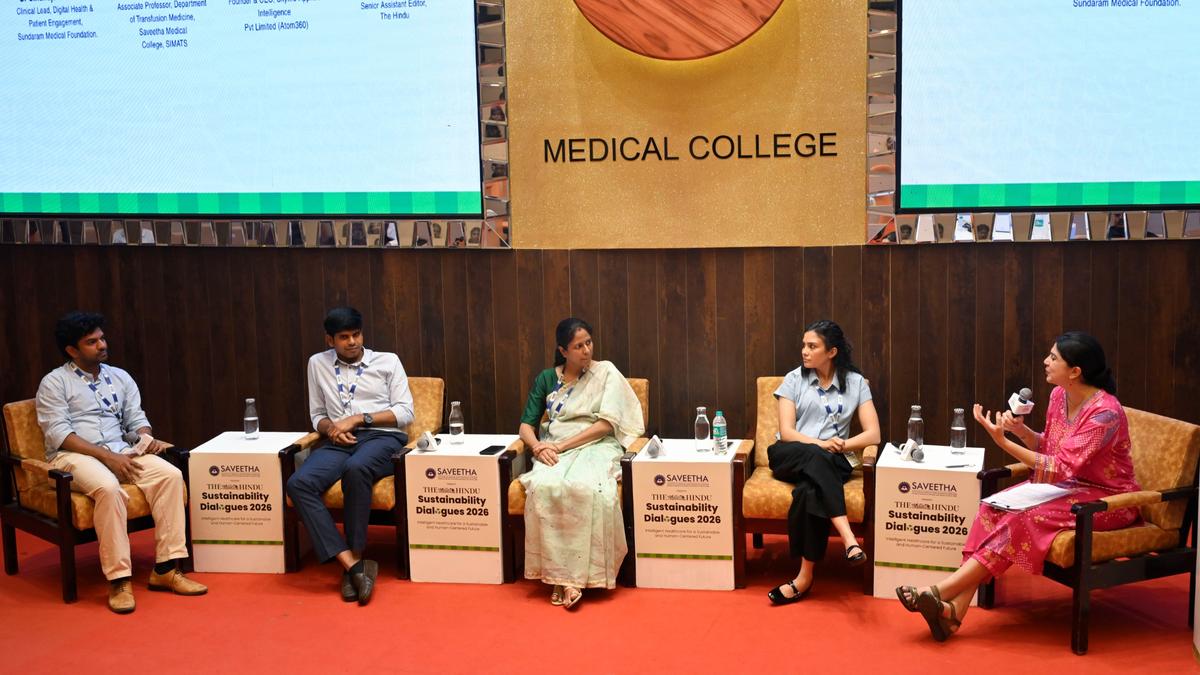
Artificial intelligence (AI) holds promise for enhancing disease detection, expanding healthcare accessibility, and lowering diagnostic expenses, but its implementation must be grounded in clinical validation, data protection measures, and human supervision, according to experts who convened in Chennai on Tuesday (October 13, 2026) for a panel discussion titled ‘Artificial Intelligence-Driven Healthcare: Innovation, Ethics, Accessibility and Sustainability’.
The dialogue was organized as part of The Hindu’s Sustainability Dialogues 2026, which was sponsored by Saveetha Institute of Medical and Technical Sciences (SIMATS). The panel consisted of Sindhuja Giritharan, Clinical Lead for Digital Health and Patient Engagement at Sundaram Medical Foundation; Richa Pant, Director of Research at Deep Tek; Reuben Fernandes, Founder and CEO of Skyfire Applied Intelligence Pvt.
Limited (Atom360); and A. Hariharan, Associate Professor in the Department of Transfusion Medicine at Saveetha Medical College and SIMATS.
Ms. Pant noted that AI was proving a significant asset in medical imaging, as digital images provide standardized data from which systems can discern patterns. Her research indicates that AI can aid in reaching larger populations, especially in regions grappling with a scarcity of radiologists and specialists. In a study conducted across six districts of Tamil Nadu, she observed firsthand the benefits of integrating AI into tuberculosis screening, which could potentially reach more people.
Furthermore, Ms. Pant emphasized that AI could enable hospitals to prioritize critical cases over processing scans strictly based on arrival order, thereby facilitating faster treatment for patients in urgent need.
Mr. Fernandes highlighted AI’s potential in addressing the low uptake of cancer screening, pointing out that less than one percent of the population undergoes cancer screening, while many patients seek medical assistance only after symptoms manifest, often resulting in advanced-stage diseases (Stage III or IV). He suggested that falling computational costs and increased smartphone penetration could make AI-assisted cancer screening more accessible.
Smartphone-based tools could be employed to identify suspicious oral lesions and guide patients to specialists for further evaluation. Mr. Fernandes also pointed out that deploying AI models directly on smartphones could reduce reliance on internet connectivity in areas with limited infrastructure.
Dr. Giritharan emphasized that AI should empower doctors to allocate more time to patients rather than supplant the human elements of healthcare. She elaborated that AI could assist with documentation, summarizing medical histories, monitoring medication adherence, and processing clinical information. However, she stressed that doctors would still be required to explain diagnoses, comprehend patients’ unique circumstances, and assist them in making informed treatment decisions.
“A human has to tell a human,” Dr. Giritharan noted, underscoring the critical role of personal communication, particularly in situations where patients are anxious about a diagnosis or find medical advice challenging due to financial or family constraints. She also advocated for a stronger focus on preventive healthcare, suggesting that AI-assisted reminders and digital follow-ups could help doctors monitor chronic condition patients (like diabetes) between consultations, identify adherence issues, and intervene as necessary.
Mr. Hariharan cautioned that clinicians must understand the constraints of AI systems and recognize when to disregard their recommendations. He stressed the importance of AI literacy among medical professionals. Additionally, he cautioned about indiscriminate sharing of patient information with AI systems. While India’s Digital Personal Data Protection Act and medical device regulations offer relevant frameworks, he stressed the necessity for clearer AI safeguards in healthcare.
On the matter of patient privacy, Mr. Fernandes advised AI tool developers to avoid accessing identifiable information (such as names, phone numbers, and locations) whenever possible, suggesting the use of unique identifiers to enable data processing without directly accessing patients’ identities. He also raised an ethical concern regarding the use of historical patient records collected under existing consent arrangements for AI model training, urging healthcare institutions to scrutinize whether the original consent sufficiently covered such uses. The session was moderated by Zubeda Hamid, Senior Assistant Editor at The Hindu.
Written by urgent.news from The Hindu's reporting — not their text. Machine-written — may contain errors; check the original before relying on it.