Roman fort found in Wales could prove myth of emperor’s camp is real
Exclusive: Finds suggest account in medieval folklore of a camp near Frenni Fawr hill was rooted in reality Magnus Maximus, the Roman emperor who ruled Britain in the fourth century, led his troops against the Picts and Scots, but a theory that he also established a military camp near Frenni Fawr hill in Wales has so far been based on folklore. Now fourth-century coins, among other finds at a…
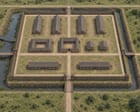
A newly discovered Roman fort in Pembrokeshire, Wales, may provide evidence that the legendary camp of Emperor Magnus Maximus, as recounted in medieval Welsh lore, was historically accurate. Dr. Mark Merrony, a Roman specialist at the University of Oxford, led the excavation that uncovered the fort, which he believes is the only Roman military site near the location described in the Mabinogion, a collection of ancient Welsh tales.
The fort, measuring 180 by 150 meters, was found about two miles south-west of the easternmost peak of the Preseli Hills, the location mentioned in the Mabinogion. The site, located on a slope with a commanding view of the surrounding landscape, likely housed around 500 troops. Archaeologists have uncovered an unusual iron stylus, numerous pottery shards, large quantities of Roman tiles, and extensive compacted clay floors, suggesting the fort was used for military purposes.
The discovery, supported by Oxford University and crowdfunding, overturns previous assumptions about the peaceful relationship between the indigenous Celtic tribe and Roman invaders.
Written by urgent.news from Guardian Science's reporting — not their text. Machine-written — may contain errors; check the original before relying on it.