Residents refused permission to appeal Drumcree parade
Garvaghy Road residents have been refused permission to appeal a decision to allow an Orange Order parade.
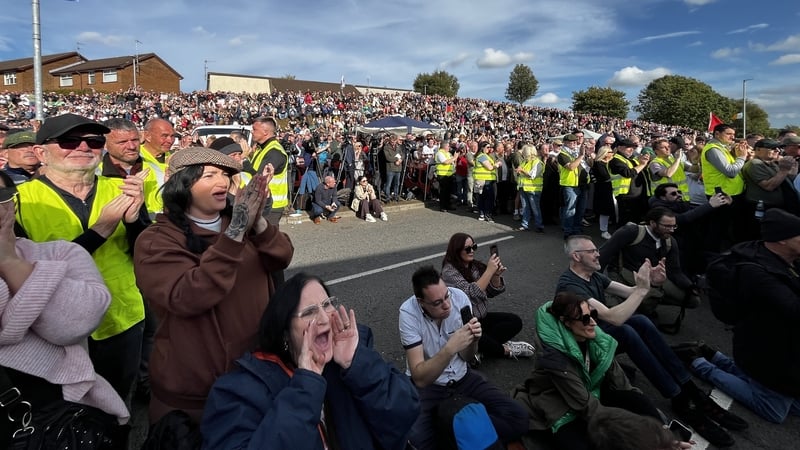
Residents of Garvaghy Road have been unsuccessful in their attempt to challenge the Parades Commission's decision to permit the Drumcree parade to pass through the predominantly nationalist road, as ruled by the Court of Appeal. The court's decision focused solely on the legality of the commission's decision, rather than whether the march should take place.
Lady Chief Justice Dame Siobhan Keegan revealed that the ruling was made prior to the secretary of state's ban on the parade on Friday. The residents argued that the commission's evaluation of potential disorder was flawed when they first approved the parade in 1998. In September, the commission allowed a planned Orange Order parade in Portadown, which would commence earlier than initially requested and with a smaller crowd.
On Monday, Lady Chief Justice Keegan concluded that the Parades Commission had appropriately considered a police assessment of the potential disorder risk and provided sufficient reasons for its decision. The Garvaghy Road Residents' Coalition spokesperson, Breandán Mac Cionnaith, noted that the decision was "very academic," given that Northern Ireland Secretary Sir Chris Bryant had already banned the march in question.
He also mentioned that the residents would explore further legal action with their solicitors. A loyalist activist, Jamie Bryson, emphasized that the law supports the Orange Order's right to walk on the Garvaghy Road, as they have lost multiple court cases. The Drumcree parade conflict began in the mid-1990s and nearly derailed the peace process, leading to riots, roadblocks, and several murders.
The Parades Commission, established in 1998, was tasked with regulating parades and mitigating tensions surrounding marches. The commission's refusal to permit the parade in 1998 sparked continued challenges from the Orange Order for the past three decades. Most recently, the Parades Commission decided on allowing the march on September 27th with certain restrictions, following the overturning of its initial decision to prohibit the march.
Last month, around 1,000 individuals, including nationalist politicians, blocked the road, preventing the Orangemen from marching from Drumcree Church to the west. Following this, residents sustained a constant presence on the Garvaghy Road until Friday, when the Northern Ireland Secretary banned the parade based on advice from the PSNI chief constable.
Written by urgent.news from BBC News's reporting — not their text. Machine-written — may contain errors; check the original before relying on it.
This story
This is one outlet's version. Read the fullest account.