Oil pollution is drifting into marine protected areas, report finds
Oil slicks from vessels and offshore oil operations repeatedly drifted into marine protected areas around the world between 2022 and 2025, a new analysis has found. The report raises concerns for important habitats for a variety of marine life, including whales, dolphins, and sea turtles. Researchers from SkyTruth, a U.S.-based nonprofit that tracks oil pollution […]
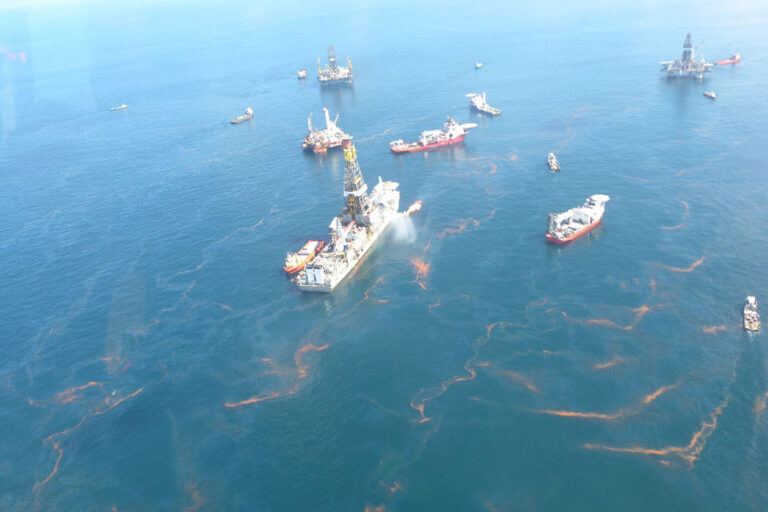
A recent analysis has uncovered that oil spills from ships and offshore oil operations have repeatedly entered marine protected areas (MPAs) across the globe from 2022 to 2025. This discovery has raised significant concerns for vital marine habitats, including those critical for species like whales, dolphins, and sea turtles. Researchers from SkyTruth, a U.S.-based nonprofit dedicated to monitoring oil pollution via satellite imagery, identified numerous slicks spanning hundreds of square kilometers in these protected waters worldwide.
John Amos, CEO of SkyTruth, expressed to Mongabay via phone his worry that these pollutants "are persistent, repeated, and chronic" across various parts of the ocean. He highlighted that "wind and current [blow] them around out in the ocean," which means that even if an oil spill happens outside an MPA, it can still end up inside the protected area.
The report highlighted particularly alarming findings along the Atlantic coast of the Republic of Congo’s Conkouati-Douli National Park. SkyTruth recorded 27 oil slicks covering an area of 880 square kilometers (340 square miles) within the park's waters. These slicks were most likely originating from three offshore oil platforms situated outside the marine park.
The park is a sanctuary for a diverse array of marine life, including sharks, rays, dolphins, whales, and manatees. Additionally, it's noteworthy that the area serves as a nesting site for leatherback and olive ridley sea turtles. In the Mediterranean Sea, about 417 km2 (161 mi2) of oil slicks affected sections of two significant MPA zones, including Spain’s Mediterranean Cetacean Migration Corridor, where all slicks were traced back to vessels.
Written by urgent.news from Mongabay's reporting — not their text. Machine-written — may contain errors; check the original before relying on it.