Military superiority cannot guarantee peace in the Middle East
The deadly attack on Riyadh’s King Khalid International Airport on Saturday was another reminder of how vulnerable civilian life and economic activity have become to the region’s wars. At least 13 people were killed, hundreds were injured and air traffic was disrupted. The consequences extended well beyond the airport itself. The attack also illustrated a larger strategic problem – an armed group…
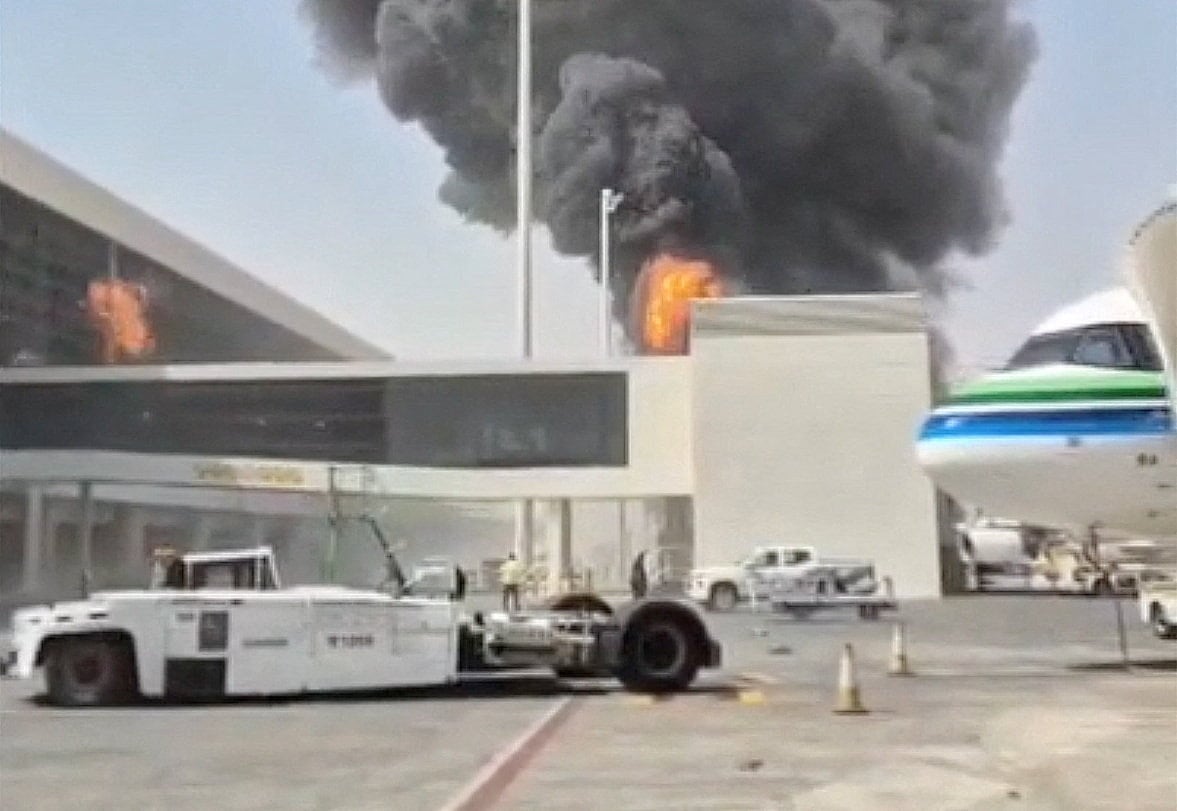
The recent assault on Riyadh's King Khalid International Airport serves as a stark reminder of the fragility of civilian life and economic activities in the Middle East amidst ongoing conflicts. The attack resulted in the loss of at least 13 lives, left hundreds injured, and caused significant disruption to air traffic. This incident underscores a broader strategic issue - the capacity of an armed group to prolong a conflict's costs, even if they do not emerge victorious.
This phenomenon has become a defining characteristic of warfare in the Middle East. While military prowess continues to dictate outcomes on the battlefield, its effectiveness in post-conflict peace-building is significantly diminished. The capacity to inflict harm has become increasingly disconnected from the ability to secure a political resolution.
In some instances, preventing an adversary from attaining its objectives has become an end in itself. The Iran, US, and Israel conflict exemplifies this predicament. Despite the superiority in military and technological capabilities held by Washington and Israel, Iran continues to pose a threat through its ability to disrupt global shipping through the Strait of Hormuz.
Despite the disproportional losses Iran has incurred, it remains capable of prolonging the conflict and threatening interests beyond its borders. The American military advantage has not been enough to force Tehran to accept Washington's terms, leading to a stalemate where military pressure persists without yielding to a politically satisfactory conclusion.
This situation may be characterized as the emergence of a "veto over peace". Certain entities have acquired the ability to obstruct peace settlements, even if they lack the power to impose their will. This influence stems from the damage they can threaten, the agreements they can undermine, and the violence they can resume. This type of veto does not necessitate formal recognition.
An adversary capable of attacking an airport, disrupting shipping lanes, or rekindling a military front can render any agreement contingent on its continued participation. While opposing an unjust agreement is one thing, deliberately sabotaging peace is another. An agreement that disregards legitimate rights or fails to resolve the root causes of conflict may set the stage for future wars.
The issue arises when actors leverage the threat of renewed violence to maintain political influence or economic privileges that could be compromised by stability. This highlights a distinction often overlooked in discussions about ending wars. Some conflicts persist not because the parties cannot reach a conclusion, but because influential actors have little interest in doing so.
In the former scenario, the obstacle lies in the balance of power and the challenge of agreeing on enforceable terms. In the latter, the obstacle is political. War may safeguard vested interests, bolster military institutions, delay domestic decisions, or provide leverage that would be forfeited during peaceful conditions. These factors can coexist within the same conflict.
Iran's case illustrates this complexity. The nation's interest in ending isolation and reviving its economy does not align with the interests of every institution that has gained influence through decades of sanctions and confrontation. While greater openness could benefit Iranian society, it could also unsettle entrenched centers of power.
This does not imply that these actors oppose every settlement. However, any agreement that alters the internal power distribution may face resistance. This raises a question that transcends the terms negotiated with Tehran: can Iran's political leadership ensure compliance among all those possessing the means to escalate? The problem extends beyond the terms negotiated with Iran.
Can Iran's political leadership ensure that all actors capable of escalation comply? The same challenges are evident in other regions. Israel's military dominance has not resolved the political future of Gaza or the Palestinian issue. In Lebanon, enduring stability hinges on the state's control over decisions of war and peace, Hezbollah's weapons, and the withdrawal of Israeli forces.
In Yemen, military action against the Houthis would not alone resolve the divisions that have fractured the state. These conflicts share a commonality - a widening gap between the ability to halt fighting temporarily and the ability to prevent its resurgence. The question remains: who can truly end these wars? In many instances, the necessary authority is dispersed among multiple actors.
One may possess the military capacity to cease hostilities, another may hold the political authority to negotiate and make concessions, while others may possess the capability to enforce or undermine an agreement. A government may sign a peace deal without being able to bind armed groups operating within its territory. An external power can enforce a ceasefire without resolving the underlying political grievances.
Even the most capable guarantor will struggle if those capable of reigniting the conflict believe the benefits outweigh the costs. This highlights the limitations of American power. The US remains the most influential external security actor in the Middle East. No other country can match its regional military capabilities.
Written by urgent.news from The National UAE's reporting — not their text. Machine-written — may contain errors; check the original before relying on it.
Also reported by 1 other outlet
- Military superiority cannot guarantee peace in the Middle East thenationalnews.com