'Massive rock avalanche likely caused Nepal flood'
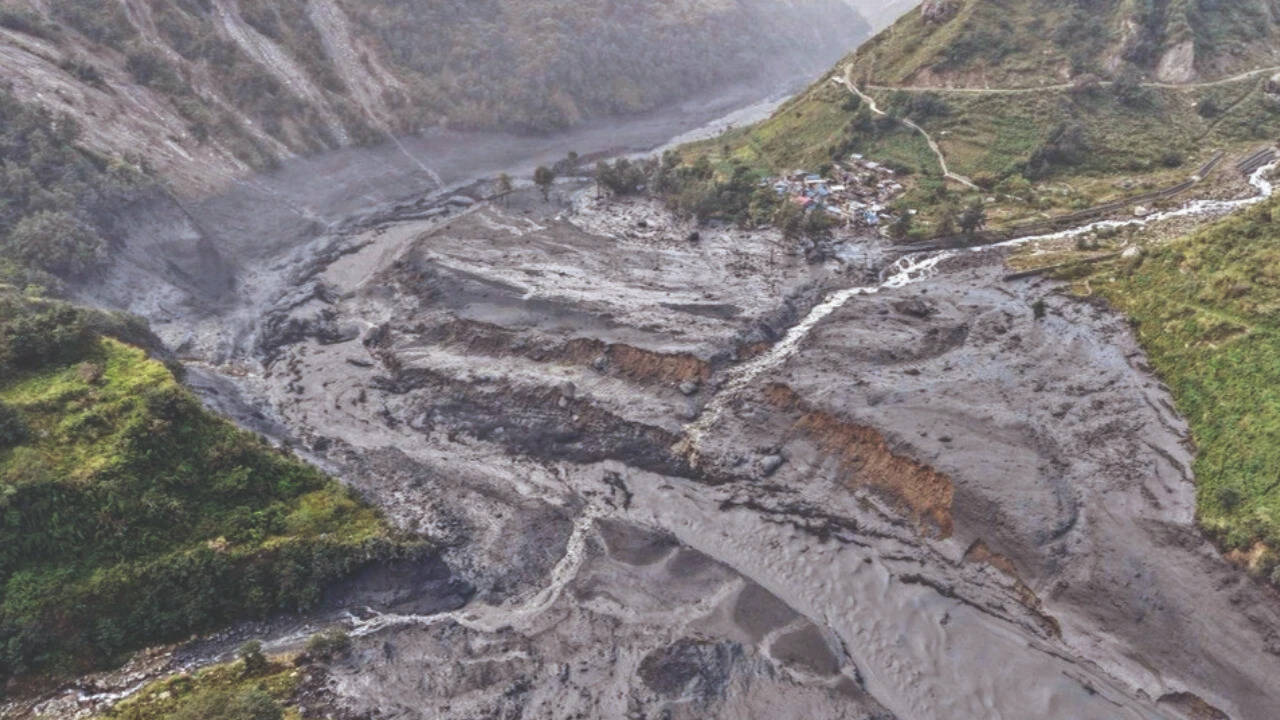
A massive rock avalanche likely caused a flash flood in Nepal's Budhi Gandaki valley on Sunday, according to preliminary scientific assessments. The disaster, which left five people missing and damaged infrastructure, occurred 46 days after a similar avalanche in Rasuwa, located less than 100km away. The avalanche is believed to have originated on Chamar massif's southern slopes, where peaks reach heights of over 7,000 meters.
While cloud cover prevented precise identification of the avalanche's source, scientists could not rule out the involvement of glacial ice. Estimates suggest the collapsed material could total several tens of millions of cubic meters, based on satellite data and a seismic signal equivalent to magnitude 5.1. The avalanche traveled about 7km through the Udilung Khola, Syar Khola, and Budhi Gandaki systems before blocking the Syar river, forming a natural dam.
The failure of this dam released water, sediment, and rocks downstream. Himalayan Geological Research traced the debris flow through approximately 4.6km of rivers, suspecting that the avalanche may have triggered a landslide-induced blockage failure near Chumchet in Gorkha district.
Written by urgent.news from Times of India's reporting — not their text. Machine-written — may contain errors; check the original before relying on it.