'It could have been a very different history': Researchers are finally starting to pin down how many Indigenous people were living in the Americas when Columbus arrived
Archaeologists and geographers have been trying to estimate the pre-1492 population of the Americas for decades. But it's difficult.
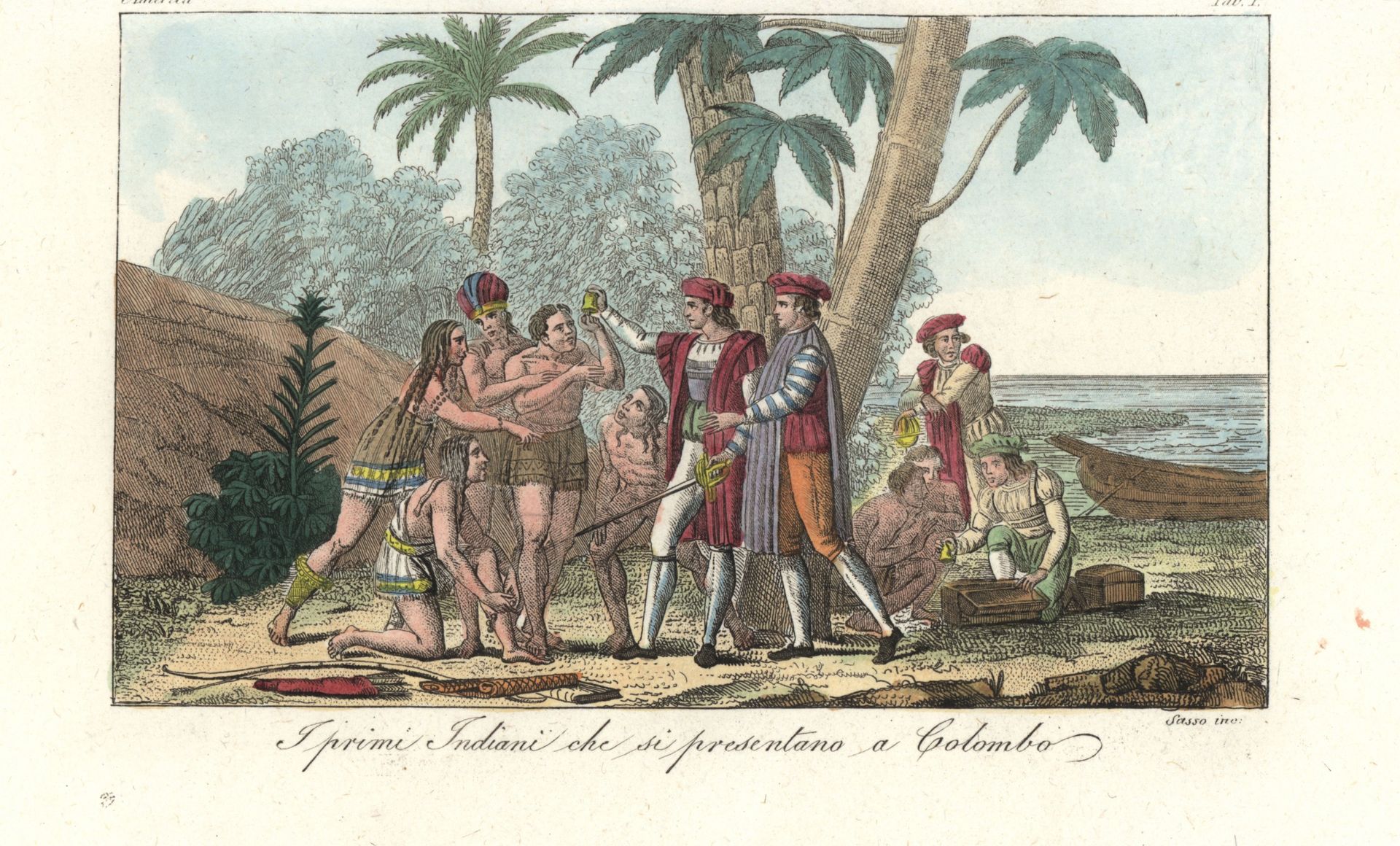
When Christopher Columbus arrived in the Americas on October 12, 1492, he encountered Indigenous people on the Bahamian island now known as San Salvador. Columbus reported meeting "great multitudes of men" who greeted him and bartered with him. However, within a few decades, the Indigenous population in the Americas was devastated by epidemics, warfare, and enslavement, a phenomenon anthropologist Eric Wolf termed the "Great Dying."
Researchers have struggled to determine the exact number of Indigenous people living in the Americas prior to Columbus's arrival, with estimates ranging from 1 million to 112 million people. The Indigenous population in the Americas had been thriving for at least 14,000 years, following their arrival via the region around the Bering Strait.
One of the first researchers to attempt to estimate the population was anthropologist Henry Dobyns, who, in a 1983 book, estimated the Indigenous population at around 112 million people. However, subsequent archaeological research revealed that the Americas were not uniformly settled, and Dobyns's estimate was likely too high. In a 2019 study, geographers compiled 129 population estimates from 82 published studies to model the hemisphere-wide distribution of the Indigenous population in 1492.
The researchers divided the hemisphere into seven regions and reached a combined estimate of 60.5 million people. In North America, the most populous groups were the Aztecs in modern-day Mexico and the Inca along the west coast of South America. However, the data from eastern North America, including the U.S. and southeastern Canada, suggested a population of about 1.6 million people.
Using radiocarbon dating techniques, researchers in a 2009 study were able to generate a single curve of radiocarbon date ranges from charcoal, animal bones, and plant remains from archaeological sites in North America, which helped estimate the population in the early 16th century before European diseases caused a dramatic decrease in the Indigenous population.
Written by urgent.news from Live Science's reporting — not their text. Machine-written — may contain errors; check the original before relying on it.