Indigenous women bring leadership, creativity & joy to clean water action (commentary)
On Indigenous Peoples Day, let’s honor the leadership and contributions of Indigenous women in water. Women – and particularly Indigenous women – are underrepresented in the water workforce and make up less than one in three voices in water governance. Yet, the water sector has much to learn from women’s leadership. Women have always led, […]
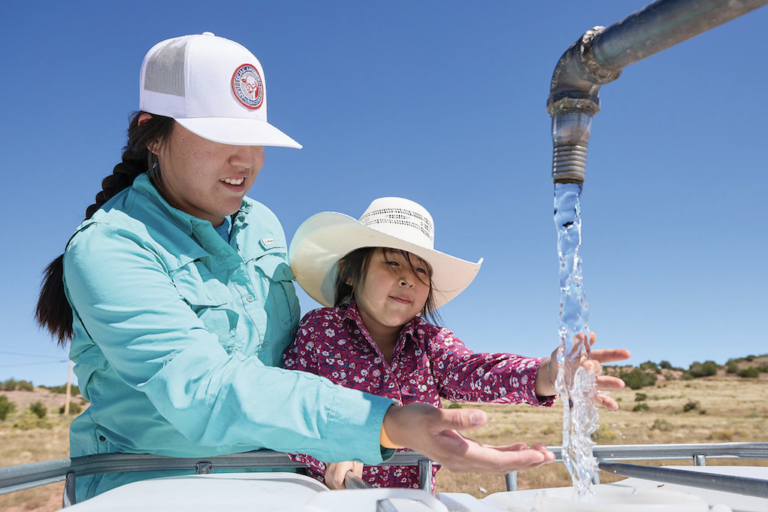
On Indigenous Peoples Day, it is important to acknowledge the leadership and contributions of Indigenous women in the realm of water. Despite being underrepresented in the water workforce, constituting less than one-third of voices in water governance, women from Indigenous communities have much to teach in terms of leadership. Historically, women have been natural leaders, adept at bringing people together, forging partnerships, resolving issues, and propelling essential work forward.
Their leadership manifests in diverse forms, ranging from community engagement and relationship building to advancing technical solutions, formulating policies, conducting research, developing infrastructure, ensuring public health, and providing education. Many women excel in all these areas simultaneously. The amalgamation of different perspectives often results in tangible progress.
Indigenous women and girls, such as those seen in Ecuador making water filters, exemplify this. Collaborating closely with Indigenous leaders like Emma Robbins and Crystal Tulley-Cordova, I have witnessed firsthand how community knowledge, technical expertise, and relationship-building harmonize to achieve remarkable outcomes. Throughout this endeavor, women persistently champion Indigenous knowledge, environmental stewardship, water justice, and community resilience.
They champion discussions on water rights, water hauling, universal access to clean water, public health, policy, research, and infrastructure. They also recognize that addressing water challenges necessitates more than just technical expertise. Real progress emerges when communities, researchers, educators, advocates, and decision-makers unite under common objectives. Women assume a leading role in establishing and maintaining these collaborations.
Written by urgent.news from Mongabay's reporting — not their text. Machine-written — may contain errors; check the original before relying on it.