Ein St. Galler KMU mischt den Medtech-Markt auf. Der nächste grosse Schritt könnte ein Börsengang sein
Icotec stellt Implantate für die Wirbelsäule von Krebskranken her. Die Produkte finden in den USA reissenden Absatz. Bei der Firma melden sich Kaufinteressenten, aber die Besitzerfamilie pocht auf Eigenständigkeit.
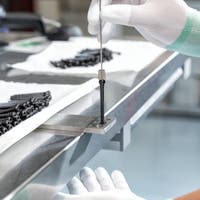
Icotec, a Swiss medtech company based in Altstätten, St. Gallen, has been experiencing rapid growth in the implants market for the spines of cancer patients. After starting as a spin-off from ETH Zurich and initially producing plastic parts for the aerospace industry, the company shifted its focus to implants for the spinal column of cancer patients in 2010.
Cancer that is not treated can spread and often affects the spine first. In the past, patients with a spinal tumor had a low survival rate of only two to three months, but today, with innovative new drugs and advancements in radiation therapy, many patients can expect to live for five to ten years. Icotec believes that carbon fiber reinforced plastic will eventually replace the majority of metal implants currently on the market.
Their products are lighter and have a slight elasticity, which is better for the spine as it allows for slight movement. The company's CEO, Christoph Eigenmann, grew up in St. Gallen and worked for Johnson & Johnson for 20 years before joining Icotec in early 2024. Icotec's business is largely focused on the American market, with over 80% of current revenue coming from the United States.
The company's success is attributed to the willingness of American healthcare systems to pay for innovative cancer treatments and the large size of the American market. Icotec has struggled to convince doctors to adopt their new material, but the improved image quality when detecting metastases with MRI or CT has been a key argument.
Traditional titanium implants often appear distorted and can hide metastases, making it difficult to accurately target radiation. Icotec estimates the global sales volume of implants used in spinal cancer treatment to be worth a billion dollars, meaning the company has not yet captured even 10% of the market. The company's founders, the Stadler family, are optimistic about continued growth.
They own the majority of Icotec and a sister company, Suprem, which produces carbon fiber reinforced plastic used in Icotec's implants. The family's wealth primarily comes from Sulzer, another industrial giant they helped transform from a hardware store to a global corporation. Sulzer went public on the Swiss stock exchange in 2014, while Icotec saw its first third-party shareholder in 2024, the American-British private equity firm MVM, which invested $30 million.
Written by urgent.news from NZZ Wirtschaft's reporting — not their text. Machine-written — may contain errors; check the original before relying on it.