Corruption case: Supreme Court directs no coercive action be taken against people linked to Punjab govt
The Supreme Court declined to stay the FIR but barred coercive steps, as the Punjab government challenges a High Court order directing a CBI probe into corruption allegations
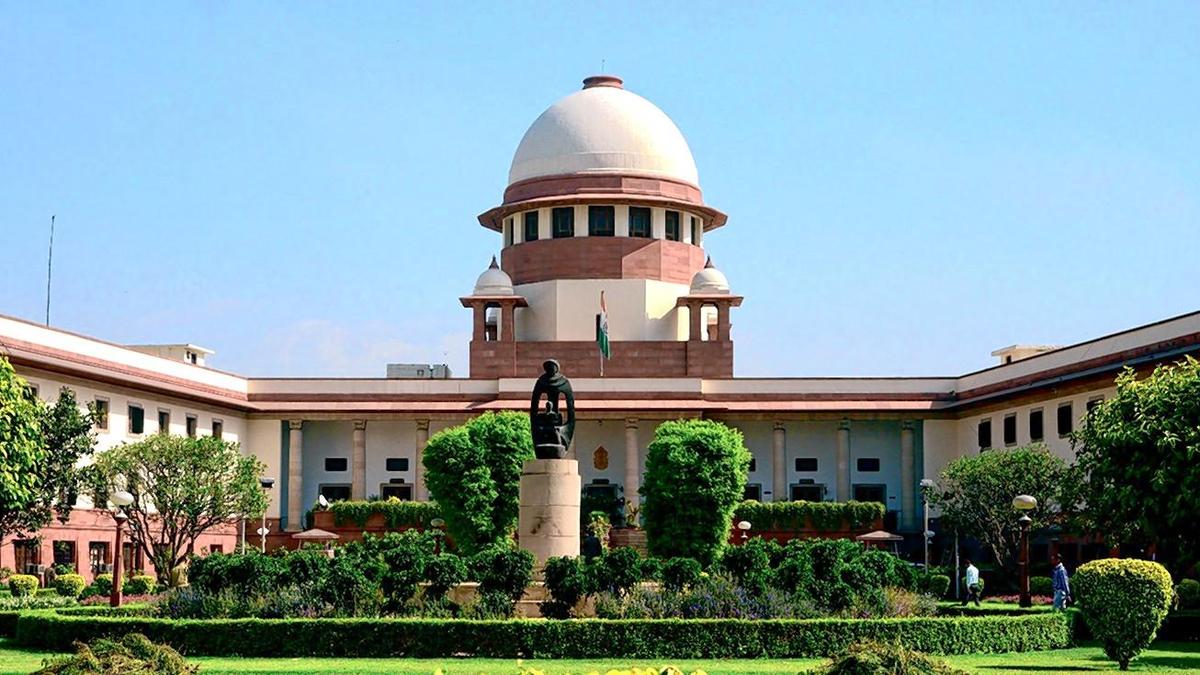
On October 12, 2026, the Supreme Court ruled that no coercive actions should be taken against individuals linked to the Punjab government, according to a report by a Bench comprising Justices M.M. Sundresh and P.B. Varale. The directive came in response to the Punjab government's plea for a stay on a High Court order instructing the Central Bureau of Investigation (CBI) to investigate corruption allegations against high-ranking officials and submit a report within two months.
The Court emphasized that while it would not stay the FIR, it would not permit any coercive measures to be initiated against the accused. The Punjab government, represented by senior advocates Vikas Singh and Sidharth Luthra, had moved the Supreme Court against the Punjab and Haryana High Court's direction issued on October 5, 2026.
The allegations, which include cash-for-transfers and cash-for-favorable policies, were brought forth by petitioner Nikhil Saraf, who contended that no action had been taken despite the ED's communications to the Aam Aadmi Party government. The High Court had also ordered the Punjab Police and the State government to hand over all documents related to the case to the CBI.
The Punjab government challenged the High Court's decision, arguing that it contained errors and that the impugned judgment was contrary to the Supreme Court's 2022 ruling in Vijay Madanlal Choudhary. The plea asserted that the High Court's judgment directed the registration of an FIR into decisions made by public servants regarding transfers, tenders, and policies without the necessary approval mandated by Section 17A of the Prevention of Corruption Act (PC Act).
The Supreme Court's order noted that the CBI had not been able to conduct an inquiry into these decisions without the required approval.
Written by urgent.news from The Hindu's reporting — not their text. Machine-written — may contain errors; check the original before relying on it.
This story
This is one outlet's version. Read the fullest account.
- Neither approved nor disapproved, Supreme Court clarifies stance on Form 6 alterations thehindu.com
- India news: Rahul Gandhi to march to Supreme Court dw.com
- ‘Do not put words in our mouth’: Supreme Court says it never adjudicated new Form 6, will examine challenge on Oct 27 hindustantimes.com
- Supreme Court orders IDF to let residents return to terror Camps israelnationalnews.com
- Court blocks plan to lease Uhuru, Central parks without public participation nation.africa
- No stay on CBI FIR but ‘coercive action’: Supreme Court on Punjab CM aide indianexpress.com