Strawberry farmer turns to steam for healthier soil and better crops
AgenciesLong-time strawberry farmer Rod Koda has rows of plants on his California farm that are still producing fruit well after the harvest would typically end.The fields brimming...
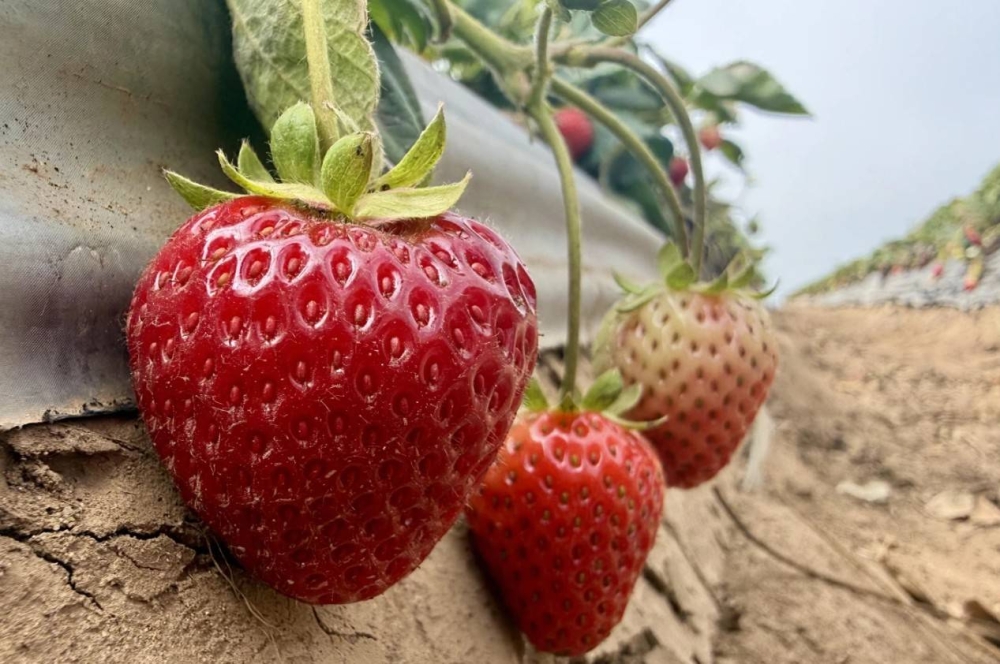
Long-time strawberry farmer Rod Koda has been amazed by the bountiful harvests from his California fields, which continue to produce well after the typical harvest season. These fields, located near the Pacific Coast, have yielded nearly double the amount of organic strawberries compared to other plots this year, thanks to a steam treatment method he implemented before planting his organic strawberries.
Koda explained that the steam treatment is part of a project aimed at finding an alternative to chemical fumigants commonly used to combat soil-borne diseases and weeds. The farmer noted that the results have been "very noticeable."
Steam technology has been utilized in greenhouses for decades, and researchers in California have been working to adapt this technology for field use. This effort is part of a broader initiative to help organic farmers increase productivity and reduce the use of chemicals that environmental advocates claim pose health risks to farmworkers and nearby communities.
Rick Tomlinson, president of the California Strawberry Commission, revealed that researchers have been exploring steam for over a decade, refining the technology for field application. Tomlinson emphasized the urgency of finding solutions to soil diseases, as failure could lead to significant financial losses for farmers.
According to Tomlinson, "Fundamentally, there's this disease in the soil, and if you don't have some solution, you're just rolling the dice, and one year you're going to end up bankrupt." He added that the disease can potentially wipe out entire fields. In the United States, nine out of ten strawberries are grown in California on 35,000 acres (14,000 hectares), making strawberries one of the state's top 10 commodities in 2025.
Strawberry growers have traditionally relied on chemical fumigants due to the fruit's close-to-ground, soft, and fleshy nature, which makes it highly susceptible to diseases. Jenny Broome, a researcher at the University of California, Santa Cruz, explained that using steam before planting can effectively eliminate key soil-borne diseases and weeds, thereby boosting crop productivity.
Broome and her team conducted trials with four growers in California last fall. Koda's farm was among the participating fields, where steam-treated plots showed higher berry production and less damage from fusarium wilt, a prevalent fungal disease. Broome suggested that steam treatment could also benefit other high-yield crops like lettuce and carrots grown in similar fields.
However, a significant challenge remains in making steam cost-effective for widespread adoption. Researchers are striving to enhance the efficiency of steam machines to cover larger areas more quickly.
David Andrews, chief science officer for the Environmental Working Group, welcomed the push for an alternative to traditional fumigants, emphasizing that farmworkers and their families have been exposed to these chemicals. Andrews noted that while the technology has advanced, concerns about the impact of fumigants have intensified. He stated, "The economics are shifting."
Written by urgent.news from Qatar Tribune Business's reporting — not their text. Machine-written — may contain errors; check the original before relying on it.