Japan’s Sumitomo Bakelite expands China chip packaging materials output amid AI boom
Japanese semiconductor materials giant Sumitomo Bakelite plans to expand production of advanced chip packaging materials in China and Singapore, marking the second such announcement for its Chinese operations in less than four months as artificial intelligence drives demand for more sophisticated semiconductors. The Tokyo-based company said on Friday that it would add production lines for mould…
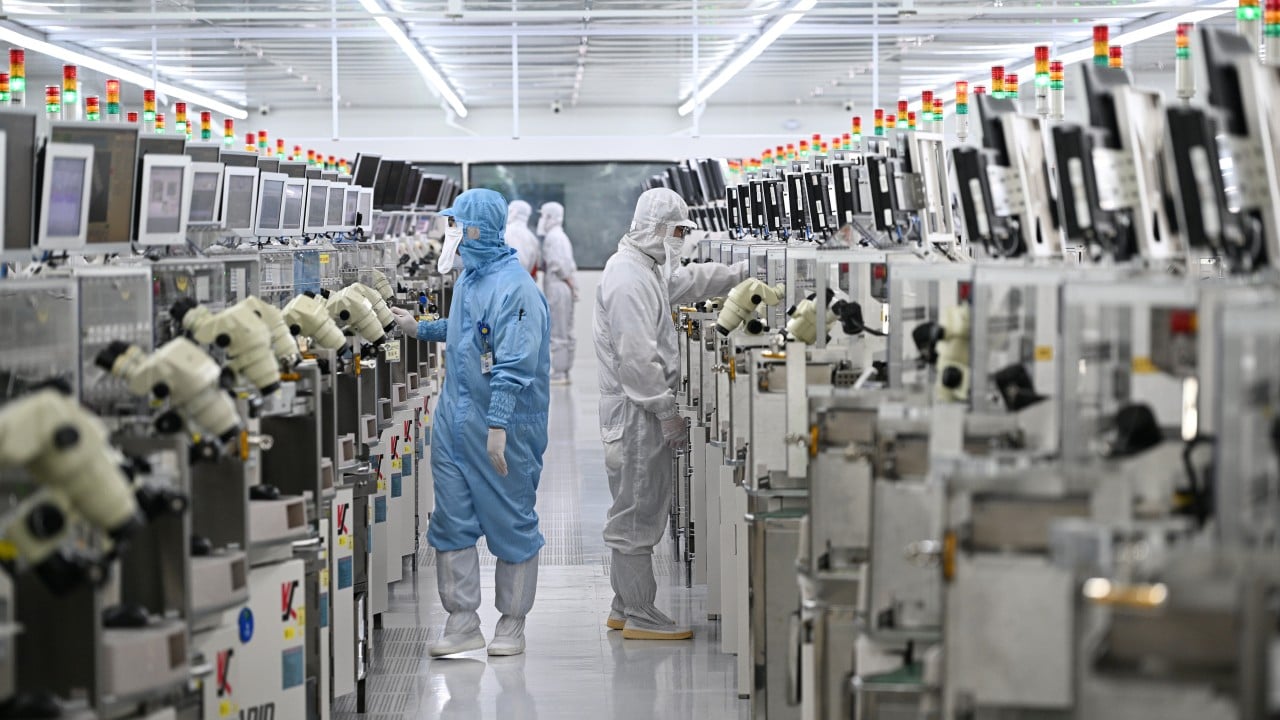
Semiconductor materials firm Sumitomo Bakelite is set to expand its chip packaging materials production in China and Singapore, driven by surging demand for advanced semiconductors in the artificial intelligence era. The Tokyo-based company announced plans to add production lines in Suzhou, Jiangsu province, and Singapore, aiming to nearly double its production capacity for mould underfill materials and triple it for compression-moulding granules.
The Suzhou expansion will involve an existing factory upgraded in 2024, with operations starting in fiscal 2030. The Singapore lines, part of an existing facility, are scheduled to begin operations by fiscal 2028's end. This move underscores the critical role of advanced packaging materials in semiconductor supply chains, as AI-driven chips demand increasingly sophisticated packaging structures.
Sumitomo Bakelite cited a growing appetite for generative AI and communications satellite applications, particularly in China and Southeast Asia, necessitating packaging technologies for larger, thinner, and densely integrated chips. MUF materials fill microscopic gaps to encapsulate semiconductor connections, while compression-moulding granules enable the production of larger packages with reduced warpage for improved chip reliability.
The semiconductor packaging materials market grew 9.3% to $27.4 billion in 2025, according to Semi. China ranks as the world's second-largest market, with $15.6 billion in revenue, trailing Taiwan's $21.7 billion. Chinese manufacturers are also intensifying investments in advanced packaging. In September, Shanghai-listed Biwin Storage announced plans to invest $672 million in a new phase of its wafer-level advanced packaging and testing project.
This comes just months after Sumitomo Bakelite's previous expansion announcement, when it disclosed plans to increase its semiconductor encapsulation materials capacity in China by around 30% at its Suzhou facility, commencing operations by December 2028. Sumitomo Bakelite has been manufacturing semiconductor packaging materials in China since 1997, gradually expanding its presence to meet mounting local demand.
The company is also pursuing global market expansion through acquisitions, recently agreeing to buy a portion of Kyocera's chemical materials business for $189.6 million, further bolstering its supply network across Japan, China, and Southeast Asia.
Written by urgent.news from SCMP Tech's reporting — not their text. Machine-written — may contain errors; check the original before relying on it.
This story
This is one outlet's version. Read the fullest account.