Giant 240-million-year-old horseshoe crab fossils discovered
Scientists in China have discovered 240-million-year-old trace fossils of a giant horseshoe crab measuring up to 70cm long, revealing surprising evidence that ancient species swam differently than modern ones and offering vital clues about ocean recovery after Earth’s most severe mass extinction.
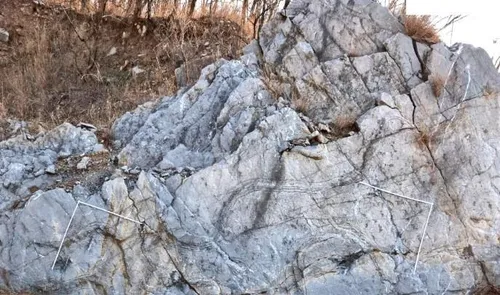
Beijing -- Researchers have unearthed 240-million-year-old fossilized trails belonging to an enormous horseshoe crab species in east China's Chaohu City, Anhui province. The discovery, detailed in the Journal of Paleontology, provides insight into ocean life post the most catastrophic extinction event in Earth's history. Nine long traces, up to 5 meters in length, were found preserved within a rock formation.
The shape of these traces, with their parallel scratch marks, led researchers to conclude the animal was a horseshoe crab, not a true crab but an invertebrate more closely related to scorpions and spiders. The size of these traces suggests the creature could have reached over 70 cm in length, making it one of the largest known horseshoe crabs.
This ancient marine arthropod, a "living fossil" due to its remarkably unchanged structure over hundreds of millions of years, swam in a shallow sea near the seafloor, leaving its distinctive marks. Unlike modern horseshoe crabs, which swim upside down, the ancient species likely had a different swimming posture, with its back end above the water.
This finding, co-author Gabriel E. B. de Barros noted, challenges our understanding of animal behavior from the past and underscores the value of trace fossils in unlocking the secrets of extinct creatures. The research team, including members from Anhui, home to Chaohu Lake, also found evidence of a diverse marine community from the Early Triassic period, further enriching the region's paleontological record.
Written by urgent.news from IOL's reporting — not their text. Machine-written — may contain errors; check the original before relying on it.