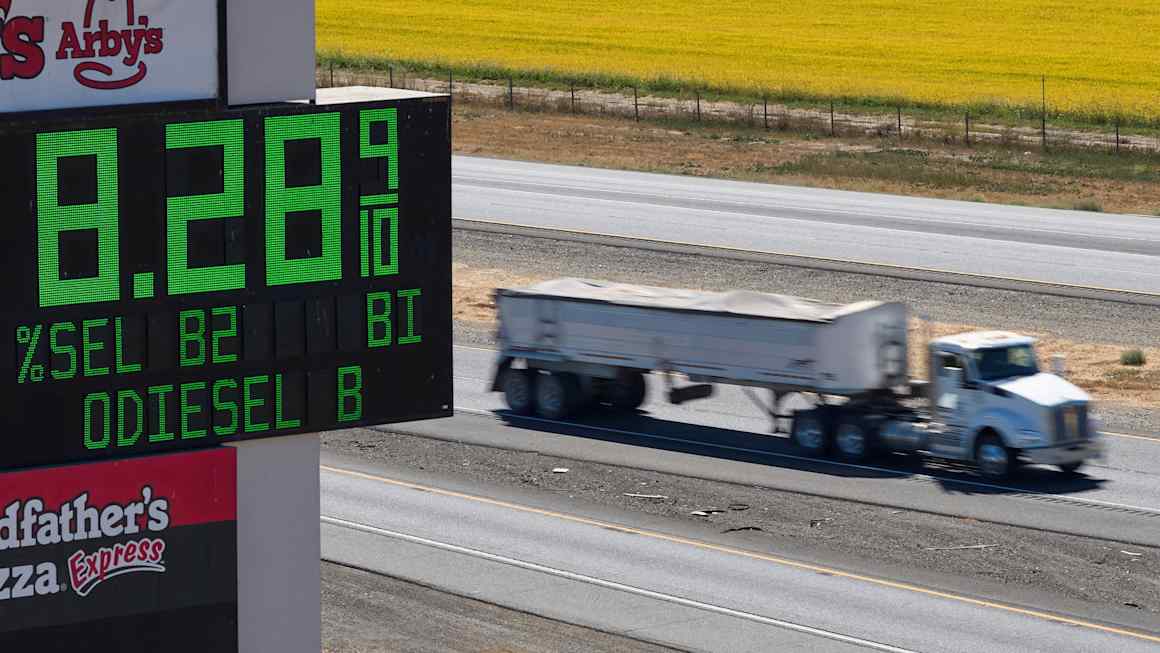
For the first time ever, 10-year bond yields track diesel prices more closely than crude, and Trump’s fuel deal with Putin may be too little too late

For the first time in history, 10-year bond yields have become more closely aligned with diesel prices rather than crude oil, according to Amrita Sen, director of market intelligence at Energy Aspects. This shift reflects the significant impact that fuel costs have on the economy and financial markets, especially during the ongoing midterm elections.
Diesel prices, which are currently at $6.277 per gallon, have slipped from their record high of $6.528 but remain 71% higher than a year ago. In contrast, U.S. crude oil prices have surged by 56% from a year earlier due to disruptions in refining capacity in the Middle East and Russia. The surge in diesel prices has trickled down to various sectors, including manufacturing, agriculture, and logistics, driving transportation costs higher.
Sen noted that products have been trading at double the price of crude oil in recent months, a phenomenon that has never occurred before - with diesel and gasoline ultimately being the drivers of inflation rather than crude oil prices. The recent price surge has prompted the Trump administration to take steps to alleviate the burden of high fuel costs.
On Monday, President Donald Trump signed an executive order to defer the 24-cent federal tax per gallon on diesel until the end of the year, although most states impose additional levies. Additionally, on Friday, Trump announced a deal with Russian President Vladimir Putin to secure diesel supplies from Russia. Russia will deliver over 300,000 tons of diesel now, followed by 500,000 tons in November and 1 million tons "immediately thereafter," with another 3 million tons to follow "within a short period of time."
However, energy experts are skeptical that Trump's efforts to lower diesel prices will have a substantial impact on affordability. Farmers and truckers argue that the executive order on the diesel tax will provide little relief, especially given the current elevated prices of $2.60 higher than a year ago. Moreover, the Russian diesel deal is also unlikely to make a significant difference, as it may divert existing customers to other sources, keeping prices relatively unchanged.
Even if Trump manages to reduce fuel prices significantly, it is doubtful that Republicans will gain an electoral advantage in the midterm elections. A recent Politico Poll revealed that only 10% of undecided voters would be more likely to vote for a Republican if gas prices dropped by $1 a gallon, while 29% believe it would have no impact, and 57% had no opinion.
Similarly, the prospect of ending the Iran war and a sharp decline in inflation showed minimal influence on their midterm voting decisions. In conclusion, despite President Trump's recent actions to address diesel prices, the situation appears to be beyond his control, and the voters may remain unconvinced by his efforts.
Written by urgent.news from Fortune's reporting — not their text. Machine-written — may contain errors; check the original before relying on it.