Anantha Nageswaran releases ‘white paper’ on AI, automation, and India’s workforce
According to the paper, the share of Indian employment exposed to artificial intelligence has risen modestly since 2012, and the quality of that exposure has improve
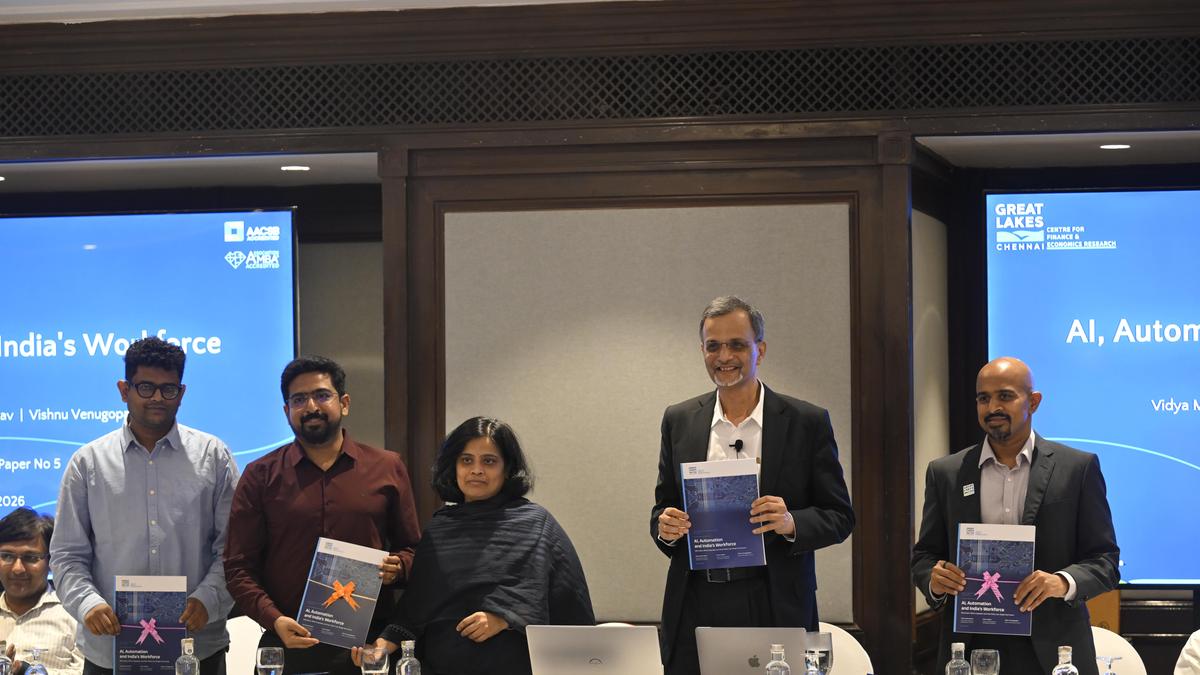
Chief Economic Advisor V. Anantha Nageswaran unveiled a white paper on AI, automation, and India's workforce. Co-authored by Vidya Mahambare, Vivek Jadhav, and Vishnu Venugopalan, the paper examines who benefits, who is at risk, and how policy can influence the future. The study found that AI exposure among Indian employment has grown modestly since 2012, with the quality of exposure also improving.
However, only fewer than 8% of workers in 2025 could be considered at risk of AI complementarity, with less than half as much work under substitution pressure compared to complementary work. The paper highlights that routine work exposed to automation pressure increased by 4.8 percentage points between 2012 and 2025. AI complementary occupations, with 46.3 million workers, are primarily found in India compared to the U.S. and Russia.
Additionally, AI exposure is largely concentrated in the workforce's early years, decreasing as workers age. The southern states, such as Tamil Nadu, lead in AI exposure, although quality is lower than in other regions. The paper was released amid the presence of bureaucrats, industry experts, and academics.
Written by urgent.news from The Hindu's reporting — not their text. Machine-written — may contain errors; check the original before relying on it.