The Secret Superpowers of Amphibians and Reptiles
They are full of unusual senses The post The Secret Superpowers of Amphibians and Reptiles appeared first on Nautilus .
The Surinam toad is a peculiar frog found in the murky waters of the Amazon basin. It lacks good vision but compensates with an extraordinary set of fingertips. Each finger ends in 16 tiny lobes, totaling 128 sensory structures packed with touch-sensitive nerve endings. These lobes can detect even the slightest movements in water, allowing the frog to sense predators even in complete darkness by holding its long front legs outstretched.
Despite being classified as a frog, Surinam toads are named for their brown and warty skin, which helps them camouflage within their environment.
The animal kingdom showcases a wide range of unique sensory adaptations. While humans typically rely on the five traditional senses, amphibians and reptiles demonstrate that there is much more to sensing the environment. Marine animals, especially reptiles, have evolved innovative senses due to the differences in water's physical properties compared to air.
Some of these sensory abilities, such as infrared detection in pit vipers, are modifications of familiar senses, while others, like magnetoreception, detect things that humans cannot perceive at all.
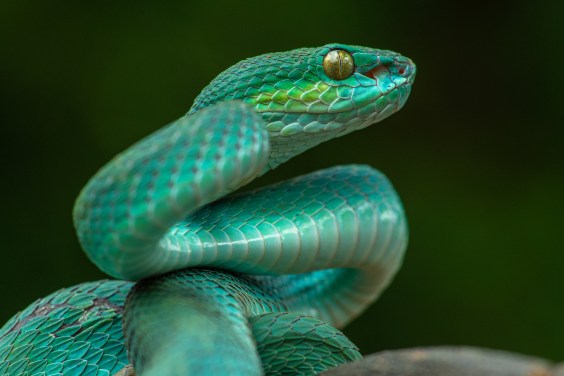
Infrared-sensing pit organs in snakes allow them to locate warm-blooded prey even in poor light conditions. Snakes integrate infrared information with their other senses, like vision, to strike their prey effectively. Amphibians, on the other hand, have evolved the ability to breathe and drink through their skin, which also excretes toxins for defense. This unique cutaneous mechanoreception enables them to detect mechanical stimulation through their skin, making them less reliant on visual cues for survival.
Magnetoreception, the ability to detect Earth's magnetic field, is another mysterious sense found in amphibians and reptiles. Salamanders, frogs, turtles, crocodilians, and some lizards can respond to magnetic fields, providing a directional reference for migratory animals like sea turtles. The Earth's magnetic field allows these animals to navigate vast distances without relying on external tools like smartphones or GPS devices.
These fascinating sensory adaptations showcase the incredible diversity of the natural world and the incredible ways in which animals have evolved to thrive in their environments.
Written by urgent.news from Nautilus's reporting — not their text. Machine-written — may contain errors; check the original before relying on it.