165-million-year-old fossil reveals mammal ancestor with modern feeding traits
Scientists have identified a 165-million-year-old mammal predecessor from China that had a broad tail for swimming and throat bones similar to those of modern mammals. Named Megacauda sungei, the Jurassic-era animal could chew and swallow food using specialised structures. Published in Nature, the findings offer new insights into how early mammals developed different feeding abilities.
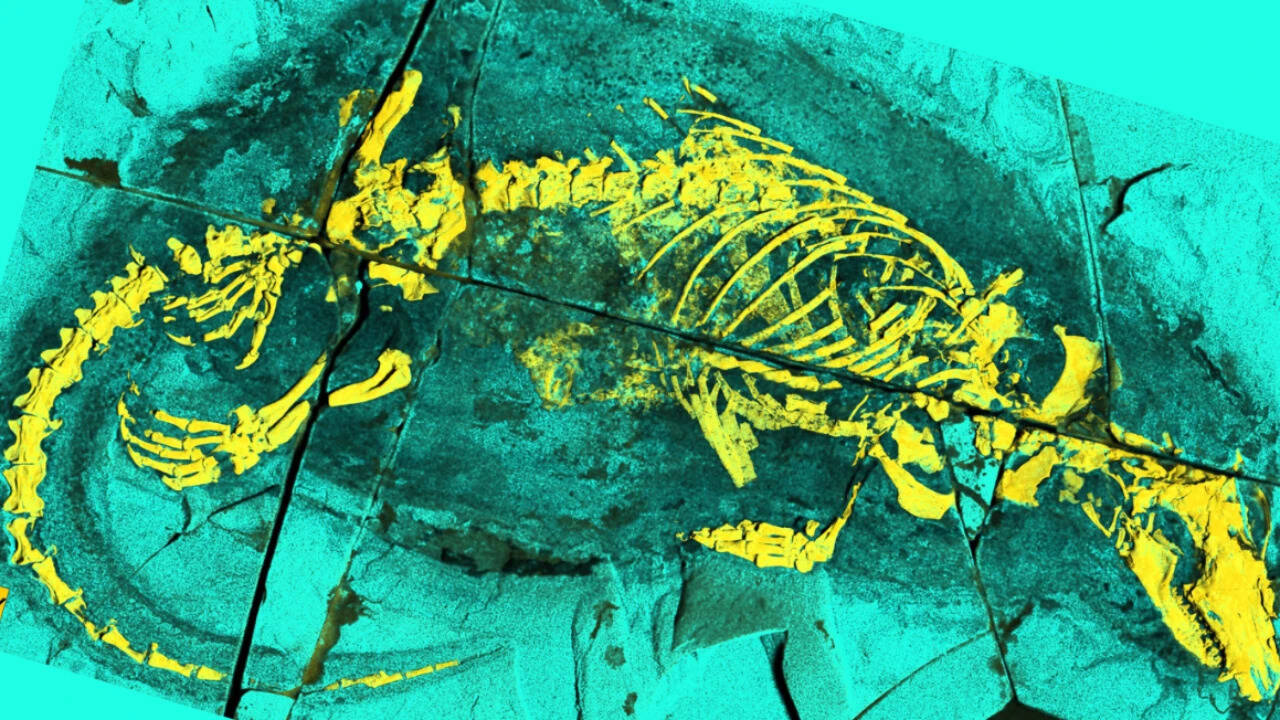
A 165-million-year-old fossil found in China has revealed that an early mammal relative, Megacauda sungei, already possessed modern feeding traits, according to scientists from the University of Chicago. The discovery suggests that some early mammals had already developed ways of chewing and swallowing food millions of years before the evolution of modern mammals.
Named after its long tail, Megacauda lived during the Jurassic period and measured around 40 to 50 centimeters in length, weighing between one and two kilograms. Its well-preserved fossil showed strong hind limbs, a flattened tail, and specialized throat structures, making it a semi-aquatic animal. The researchers found that Megacaudahad similar throat bones, known as hyoid bones, to those found in modern mammals.
These bones help support the muscles involved in swallowing and are crucial for the efficient and effortless swallowing of food after chewing. This evolutionary innovation allowed early mammals to diversify into a wide range of diets, from carnivores to herbivores, and play a significant role in their evolutionary success.
Written by urgent.news from Times of India's reporting — not their text. Machine-written — may contain errors; check the original before relying on it.