Skies across the UK illuminated by the northern lights
Though mostly visible near the Arctic Circle, the natural phenomenon dazzled sky-gazers as far south Devon, Hampshire and Kent The northern lights illuminated the skies across the UK on Friday and Saturday evening. Sky-gazers as far south as Devon, Hampshire and Kent were treated to the dazzling natural phenomenon, also known as the aurora borealis. Continue reading...
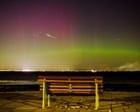
The northern lights, also known as the aurora borealis, lit up the skies across the UK on Friday and Saturday evenings, captivating sky-gazers from as far south as Devon, Hampshire, and Kent. The Met Office confirmed that sightings could continue until Tuesday for those with clear skies, though such occurrences are typically visible near the Arctic Circle and northern Scotland.
The mesmerizing light display occurs when charged particles from the sun, carried by the solar wind, collide with gases in Earth's atmosphere around the magnetic poles. As these energetic particles interact with atmospheric gases like oxygen and nitrogen, they emit various wavelengths of light, resulting in the vivid colors often associated with auroras.
According to the Met Office, the sun emits solar wind at approximately 1 million miles per hour. When this solar wind interacts with Earth's magnetic field, particularly when its polarity is opposite to Earth's, the charged particles are funneled toward the magnetic poles. Once these particles collide with atmospheric gases, they release energy in the form of light, creating the breathtaking aurora displays.
The Met Office also noted that 2026 is expected to be a peak year for aurora-spotting, as the sun is currently in a heightened state of activity due to its 11-year natural cycle.
Written by urgent.news from Guardian Science's reporting — not their text. Machine-written — may contain errors; check the original before relying on it.