Mennesket mot maskinen
Den største trusselen mot AI-revolusjonen kan være folk med plakater.…
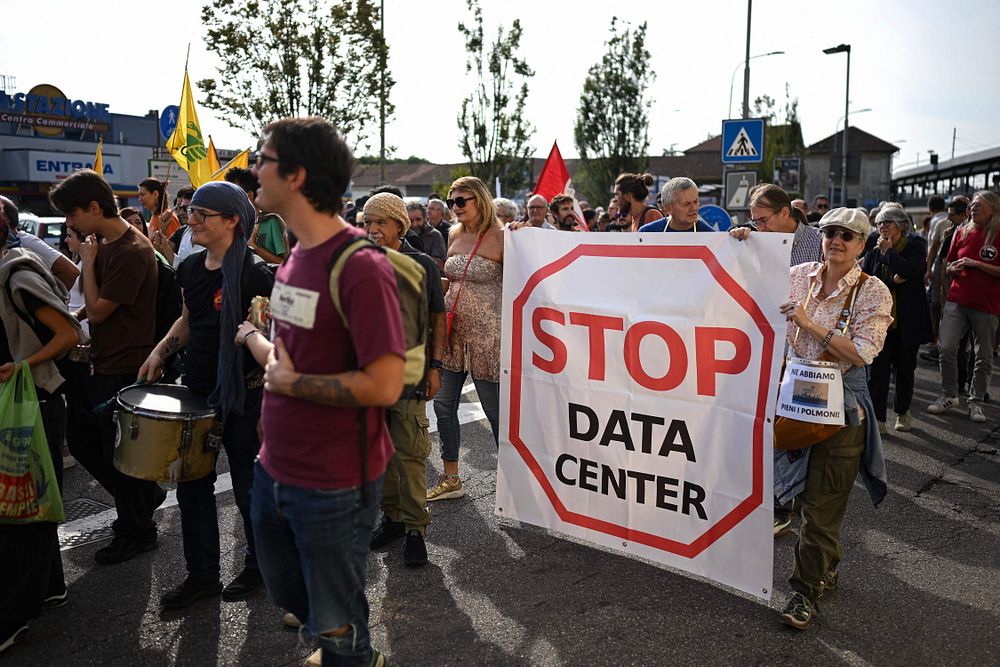
In the heart of Inner Mongolia, China, and Skien in Telemark, Norway, a global race is being waged – a competition for data power. Ulanqab boasts 89 data centers in construction or planning, spearheading China's efforts to reclaim technological dominance from the United States. This rapid pace, according to The Financial Times, is unprecedented.
In Skien, Google has acquired nearly 2000 acres of land, where data centers are already underway and more are planned. The scale of this development is immense, covering everything from cat videos to cryptocurrency mining, both highlighting the reality of data center operations but offering a lesser glimpse into the full picture.
Data centers, vital for sectors ranging from healthcare to business, are the infrastructure for technology – and for powerful entities in Beijing and Washington DC, this race is critical. "America is in an existential race with Communist China for the technologies that will shape the future," declared Republican Senator Dave McCormick.
It's a race reminiscent of past conflicts over iron and copper, or a parallel to oil and gas politics. Without data centers, one would fall behind. The United States aims to reach around 56 gigawatt (GW) of data center capacity by the end of 2026, while China has around 24 GW, and Europe, the Middle East, and Africa together have about 14 GW.
The driving force behind this is artificial intelligence – not just usage, but the development of new, increasingly powerful models, which require data centers that in turn require vast amounts of energy. Demand for new capacity already far outstrips supply, according to American bank Morgan Stanley. This gap is expected to widen further.
The lack of data centers could be the most immediate obstacle to further development, argues The Wall Street Journal. Data centers are built in natural areas or near towns and neighborhoods. Protests against massive expansion in Inner Mongolia are few in international media, a common occurrence in an authoritarian state. In the United States, however, data centers have become a major controversy leading up to the November 3rd congressional election.
Across the country, people are protesting, representing a rare unifying point between the radical left and MAGA-right. Fear of environmental destruction, pollution, resource depletion (they require large amounts of water for cooling) and rising energy costs are common concerns, even as they provide few permanent jobs after construction and relatively little tax revenue beyond property tax.
Beyond that lies growing skepticism towards big tech, the "nerds with crowns" that former Trump strategist Steve Bannon calls them – the tech barons warning that the products they develop could destroy humanity. Data centers in Norway have been relatively quiet, though they sometimes evoke a Klondike spirit, as E24 has reported.
When tech companies host local festivals with Norwegian giants like Jan Eggum and Trang Fødsel, the techno-race between the world powers and threats of a doomsday feel extremely distant. But in the industrial region of Grenland, concern is growing. This could be the quiet before the storm. In an area almost built on energy-intensive industries, the biggest concern is power.
At a recent county conference in Grenland organized by the industrial association Powered by Telemark, the parties gathered to discuss. However, there are real interests at stake that cannot be resolved with a simple dialogue. The government has warned of stricter regulations, but it's unclear what will come. Time is running out.
I was Minister of Petroleum (H) from 2018-2020, and I had responsibility for the government's policy on data centers. I left partisan politics when I started E24.
Written by urgent.news from E24 Norway's reporting — not their text. Machine-written — may contain errors; check the original before relying on it.