Humans Watched This Supernova Explode Nearly a Millennium Ago. Now You Can See It in High Definition
The new image isn’t just stunning—it may also provide clues about how this star survived its own explosion.
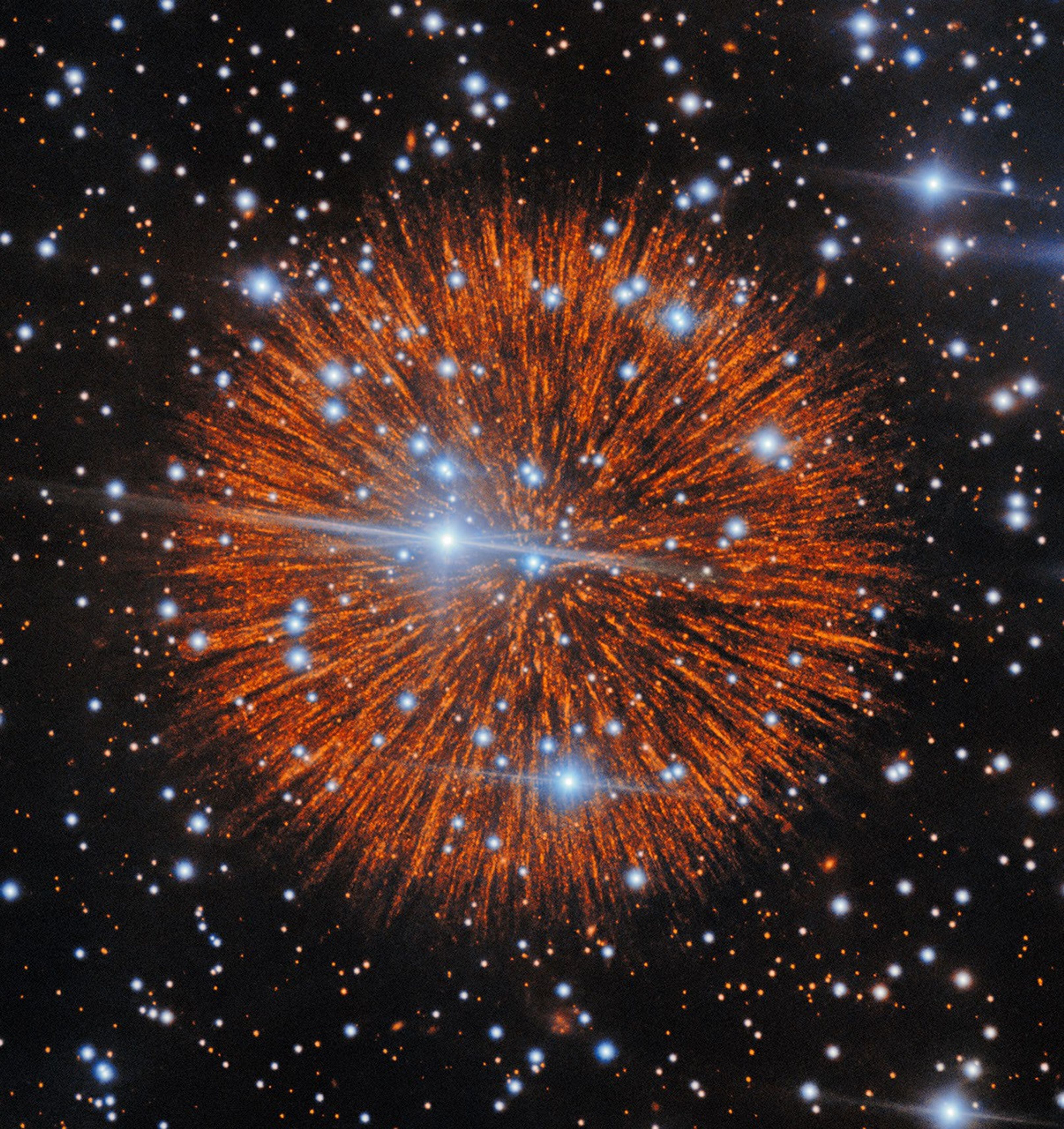
Nearly a millennium ago, humans witnessed a supernova explode. Now, a team of researchers has captured this celestial event in high definition, thanks to observations made with the Gemini North telescope in Hawaii. This new view reveals that the remnants of the supernova contain over 10 times more structures than previously seen.
The filaments of matter, resembling fireworks or dandelions, are not continuous but rather shaped like beads on a string, each bead measuring about four light-days in diameter. These "cosmic pearls" are uniform in size, prompting researchers to model their formation. The regularity of these beads, which typically deviate from the expected irregular shapes, could provide insights into stellar death and the formation of zombie stars, stars that, after a violent supernova, still exist in the cosmos.
This discovery is particularly significant as the Pa 30 nebula, the supernova remnant, matches historical records from Chinese and Japanese astronomers who observed a new star in the sky in 1181. This event was initially mistaken for a new star but was later identified as the supernova that created Pa 30.
Written by urgent.news from Wired Science's reporting — not their text. Machine-written — may contain errors; check the original before relying on it.
This story
This is one outlet's version. Read the fullest account.