Humans Watched This Supernova Explode Nearly a Millennium Ago. Now You Can See It in High Definition
The new image isn’t just stunning—it may also provide clues about how this star survived its own explosion.
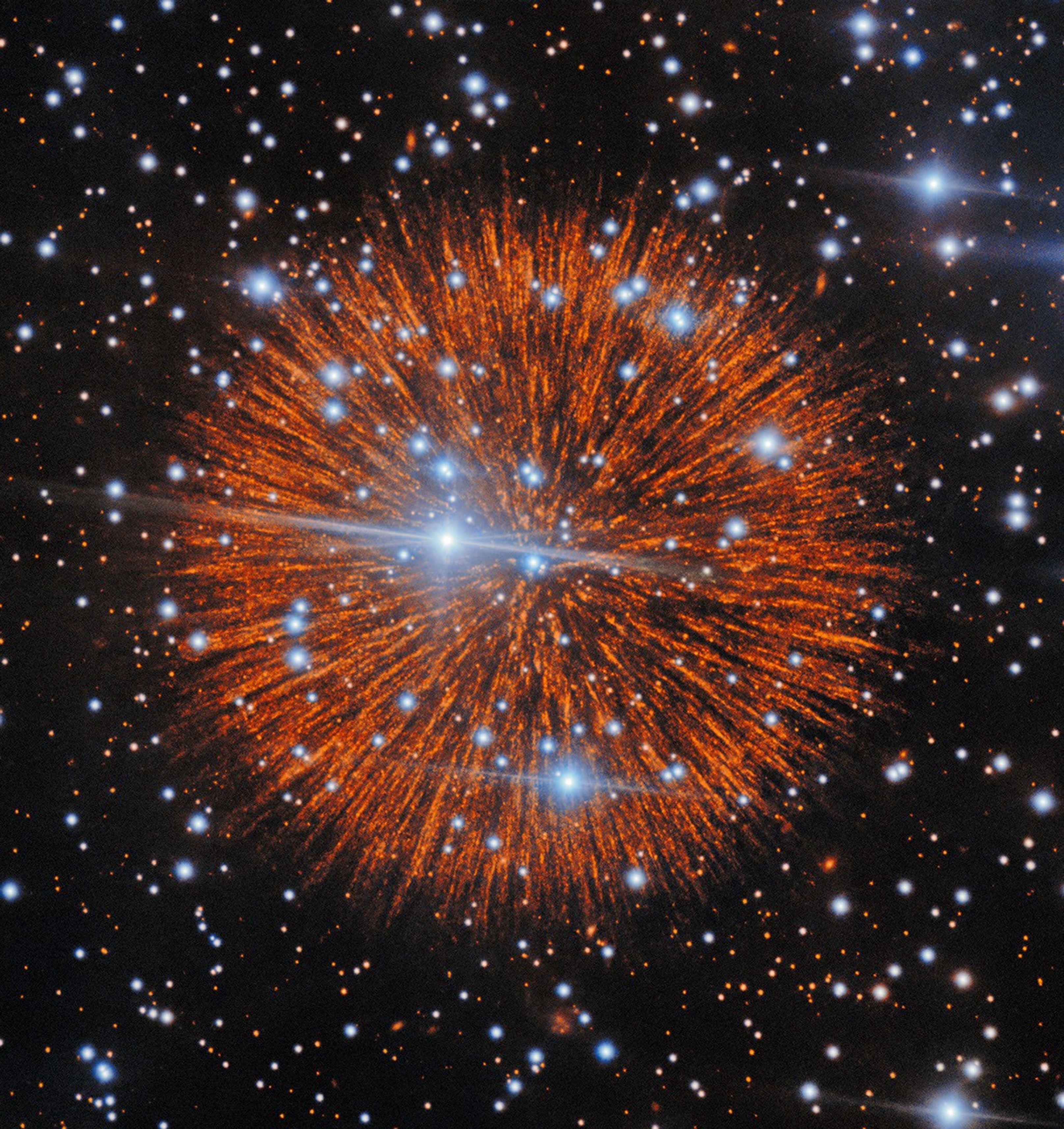
Nearly a millennium ago, humans witnessed a supernova explosion. This celestial event has now been captured in high definition, thanks to recent observations made with the Gemini North telescope in Hawaii. The new images reveal an astonishing level of detail, showing around 10 times more structures than previous observations had captured.
The filaments observed in these images are not continuous as previously thought, but rather resemble beads on a string. Each bead, or "cosmic pearl," measures approximately four light-days in diameter, making them enormous in size. These beads are strikingly uniform in size, leading researchers to model them and better understand their formation.
The exact process that created these beads remains unclear, but it's believed they are concentrations of material ejected during the supernova explosion. What's particularly intriguing is the regularity of these beads. Typically, after a supernova, astronomers would expect to find irregular accumulations, but these beads are similar in size and aligned along the filaments. This strange order could provide valuable insights into stellar death.
Adding to the uniqueness of the Pa 30 nebula, the central star is not entirely dead. It is classified as a "zombie star," a rare occurrence where a portion of the star survives the explosion. Studying these peculiar structures in Pa 30 may help astronomers reconstruct more accurately the mechanisms behind such detonations and how zombie stars can continue to exist.
This discovery is remarkable because it links modern observation so directly with human accounts from over eight centuries ago. The nebula aligns with records left by Chinese and Japanese astronomers in 1181, who observed a new star in the sky that remained visible for several months. Centuries later, scientists linked this event to the supernova that formed the Pa 30 nebula.
Written by urgent.news from Wired's reporting — not their text. Machine-written — may contain errors; check the original before relying on it.