Assam, Meghalaya villagers join hands to oppose States’ joint hydropower project
Residents of villages along the Kulsi River gather under the banner of Assam-Meghalaya Joint Protection Committee, saying the dam would affect 46 villages
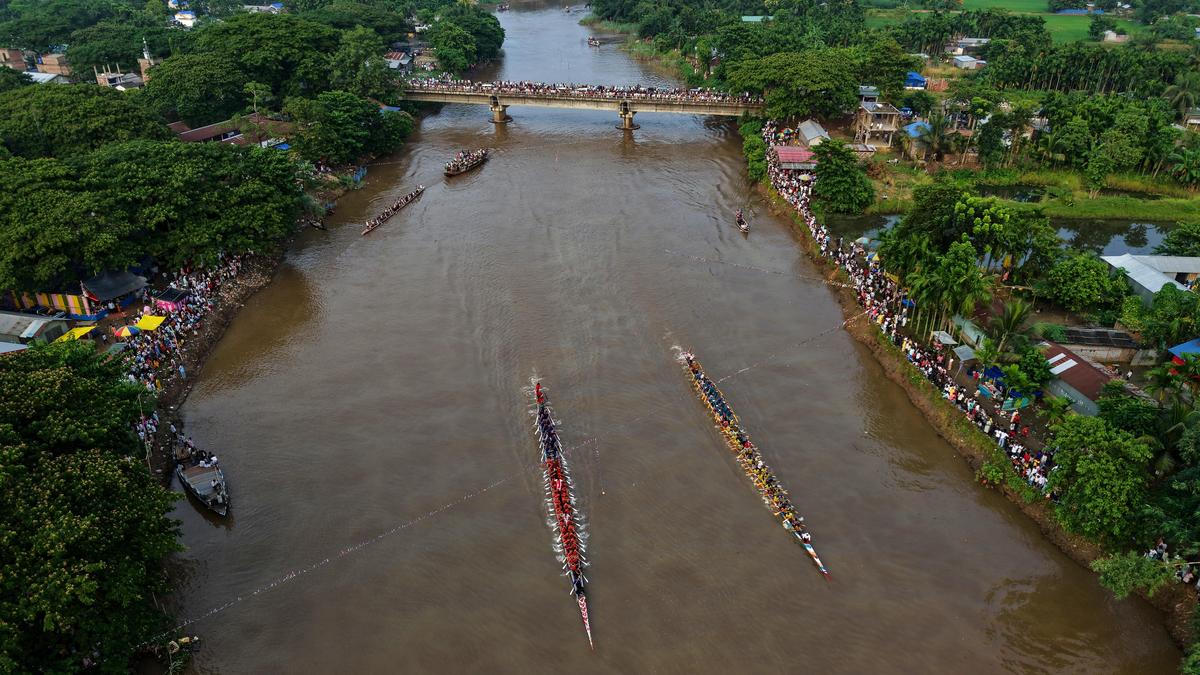
For decades, Assam and Meghalaya villagers living along the Kulsi River have been at odds due to a disputed boundary. Recently, these communities united to oppose a joint State government hydropower project on the Kulsi River, which passes through crucial habitats of the endangered Gangetic dolphin. In June 2025, the governments of Assam and Meghalaya announced plans for a 55-megawatt dam on the confluence of the Dron, Shree, and Dilma Rivers, located at the Assam-Meghalaya border, roughly 80 km southwest of Guwahati.
More than 2,000 indigenous Bodo, Garo, Khasi, and Rabha people gathered in Ukiam, near the proposed dam site and within two of the six disputed border sectors, to renew their opposition to the project. The Assam-Meghalaya Joint Protection Committee, established in 2025 to coordinate opposition, organized the rally. Traditional chiefs from Nongkhlaw, Nongmynsaw, and Rambrai assured villagers they would not grant consent for the hydropower project, emphasizing that such consent is required for any land-related projects and will not be granted for this proposal.
Albert Nonglang, president of the AMJPC, stated that the dam would affect 46 villages and cause significant ecological and social implications. Despite potential monetary compensation, the long-term consequences of displacement for indigenous communities remain a concern. The project, if built, would irrigate about 26,000 hectares and mitigate floods while generating 55 megawatts of power.
Written by urgent.news from The Hindu's reporting — not their text. Machine-written — may contain errors; check the original before relying on it.
This story
This is one outlet's version. Read the fullest account.