What's been driving Hawaii's lava fountains?
Before the lava fountains started, the ground was expanding by half a meter a day.
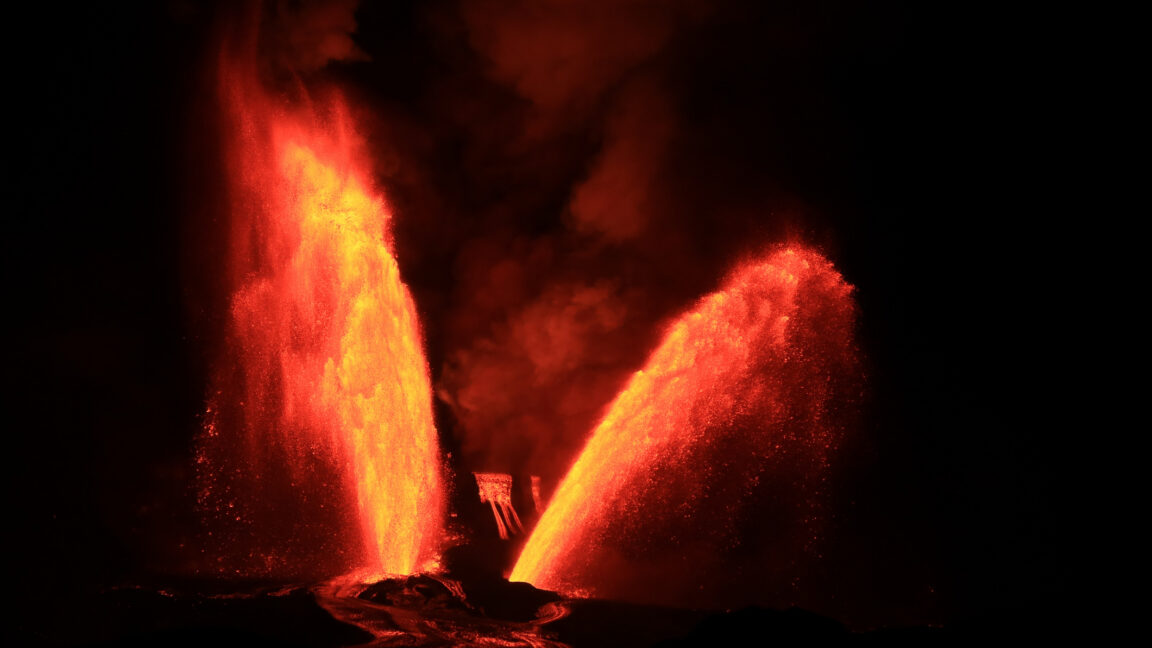
Hotspot-driven volcanism often results in relatively slow lava flows that people can avoid. However, in certain locations like Mount Etna, Hawaii, and Iceland, lava is expelled in dramatic fountains that can reach hundreds of meters in height. The reasons behind these fountains remain unclear, but a recent series of eruptions at the Kilauea volcano has provided researchers with some of the most detailed data yet on erupting lava fountains.
Scientists from the US Geological Survey have recently published their findings in the journal Science, comparing the observed fountains to their existing theories about the drivers of such volcanic activity. Despite being the youngest and most active volcano in Hawaii, Kilauea has only experienced three episodes of fountaining since 1823.
This rarity of fountaining activity has generated intense interest among researchers, who have set up 35 data-gathering stations around the volcano, including seismic, infrasound, geodetic, gas, and visual and thermal cameras, to better understand its structure.
Written by urgent.news from Ars Technica Science's reporting — not their text. Machine-written — may contain errors; check the original before relying on it.
This story
This is one outlet's version. Read the fullest account.
- What's been driving Hawaii's lava fountains? arstechnica.com