What's been driving Hawaii's lava fountains?
Before the lava fountains started, the ground was expanding by half a meter a day.
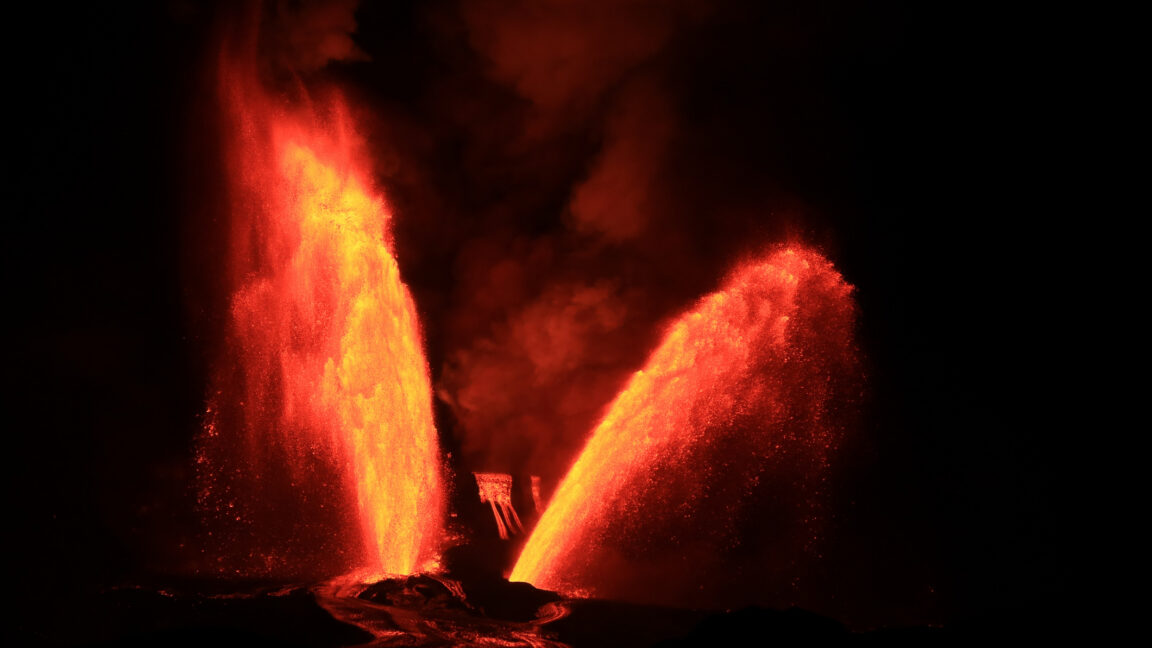
Hawaii's lava fountains have intrigued scientists for decades due to their dramatic nature and the potential for understanding volcanic activity. While most hotspot-driven volcanism is relatively calm, fountaining can reach heights of several hundred meters, as seen in locations like Mount Etna and currently at Kilauea volcano. Researchers from the US Geological Survey have utilized a wealth of data collected over several decades to study these fountaining episodes.
Kilauea, the youngest and most active volcano in Hawaii, has experienced three such episodes since 1823, despite its continuous volcanic activity. This has allowed scientists to gather extensive data using 35 data-gathering stations equipped with various sensors, including seismic, infrasound, geodetic, gas, and visual and thermal cameras.
The recent eruptions at Kilauea have provided researchers with some of the best documentation yet of erupting lava fountains, offering valuable insights into the factors that drive these spectacular volcanic phenomena.
Written by urgent.news from Ars Technica's reporting — not their text. Machine-written — may contain errors; check the original before relying on it.
Also reported by 1 other outlet
- What's been driving Hawaii's lava fountains? arstechnica.com