Trump postpones possible strike on Iran, oil prices react
Oil prices fell on Oct. 9 after U.S. President Donald Trump said he would not strike Iran, according to Reuters.
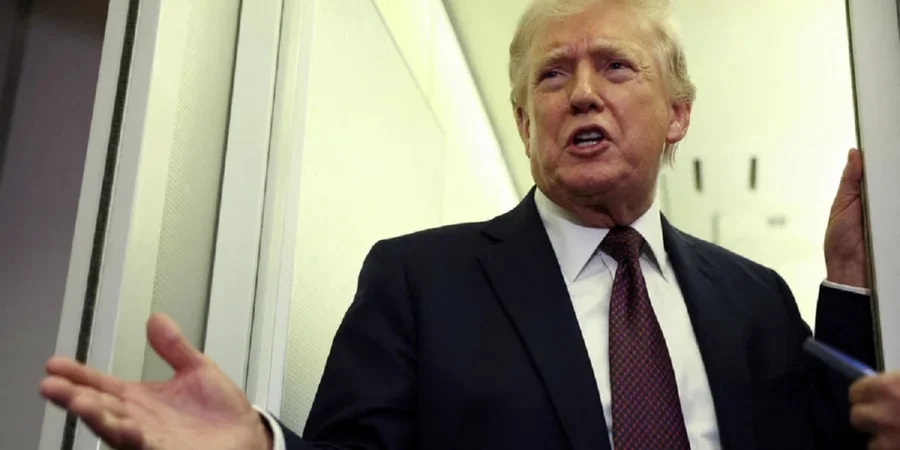
Oil prices experienced a dip on October 9th after President Donald Trump announced he would not be striking Iran, according to Reuters. This occurred following Trump's pledge not to launch an attack on Iran before the upcoming U.S. elections, as talks aimed at ending the ongoing conflict continued to proceed. Brent crude futures dropped by $1.68, or 1.61%, reaching $102.60 per barrel, while U.S. West Texas Intermediate (WTI) crude futures decreased by $1.31, or 1.43%, settling at $90.18.
Brent crude showed a gain for the week after closing at a 4% increase on October 8th, while WTI crude is projected to finish slightly lower. Trump stated that Washington was engaged in productive discussions with Iran, emphasizing that no new strike was planned prior to the November 3rd midterm congressional elections. This statement came in response to reports suggesting he was contemplating a strike before the designated date.
On the same day, Iran's Tasnim news agency reported that Foreign Minister Abbas Araqchi indicated Tehran was contemplating the U.S. response to its proposal to restart shipping through the Strait of Hormuz within seven days. Analyst Linh Tran of XS.com noted that the prospect of reducing tensions would require tangible progress in negotiations and improved safety for shipping through the Strait of Hormuz.
The International Energy Agency agreed to expedite the release of oil reserves and prioritize diesel supplies under a plan introduced in March. In July 2026, President Trump had previously stated that every time Iran attacked a ship in the Strait of Hormuz, the United States would destroy a bridge or power plant. From July 22nd to 23rd, U.S. forces carried out their 12th consecutive nighttime attack on Iran.
Despite the heightened tensions in the Red Sea, oil prices surged to their highest point in over six weeks on July 23rd. However, on July 30th, oil prices fell even as the Middle East witnessed further escalation. On August 10th, oil prices rose amidst uncertainty surrounding the reopening of the Strait of Hormuz. On August 17th, tensions between the U.S. and Iran impacted oil prices.
Oil prices dipped slightly on August 21st, despite the potential for a second consecutive weekly increase, as the U.S.-Iran war remained stalemate and continued to disrupt Middle East oil supplies. On August 27th, oil prices declined due to expectations of talks between Iran and Oman, which could help reopen the Strait of Hormuz.
By September 10th, oil prices had surpassed the $100 mark. On September 28th, oil prices edged higher, as a delay in U.S.-Iran ceasefire talks occurred following Trump's rejection of a proposed peace agreement.
Written by urgent.news from New Voice of Ukraine's reporting — not their text. Machine-written — may contain errors; check the original before relying on it.
This story
This is one outlet's version. Read the fullest account.
- WTI slips below $90.50 as Trump signals no pre-election strike on Iran fxstreet.com
- Oil Price Today (October 9): Crude oil dips 1% to $103 as Trump rules out Iran attack before midterm elections. What are analysts saying? economictimes.indiatimes.com
- Oil falls as Trump comments on Iran talks ease supply concerns brecorder.com
- Oil prices dip after Trump says no Iran attack before midterms hellenicshippingnews.com
- Oil falls as Trump comments on Iran talks ease supply concerns investing.com
- Oil prices fall as Trump pauses Iran attacks, China restarts fuel exports – business live theguardian.com
- Tucker Carlson on Trump, treason, the Iran war and why he admires the GCC arabianbusiness.com
- Trump says US won’t attack Iran before midterm elections moneyweb.co.za