Study highlights regional variations in coral bleaching across India, calls for greater focus on local factors
While Lakshadweep was found to be the most affected, with up to 37% of the coral cover bleached or dead at intermediate levels of accumulated heat stress, Mahatma Gandhi Marine National Park (MGMNP) in Andaman Islands faced only 11.5% bleaching or mortality.
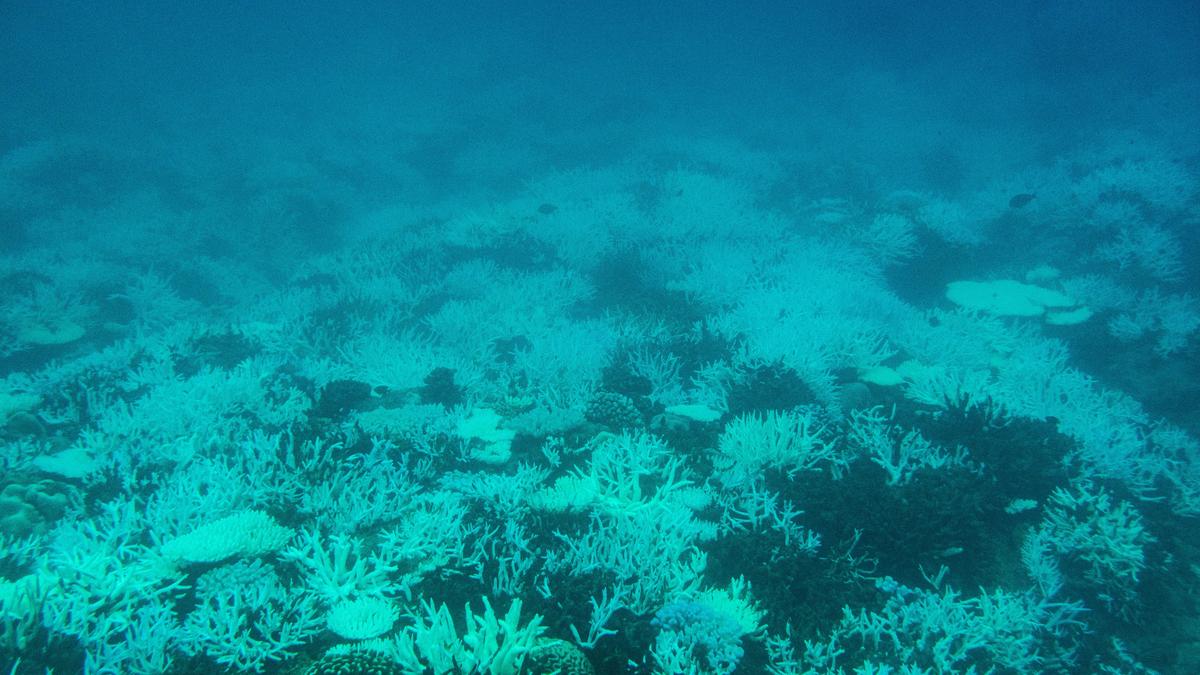
A recent study has revealed significant regional variations in coral bleaching across India's coral reefs during the fourth global coral bleaching event in 2024. The research, published in the journal Coral Reefs, found that while Lakshadweep experienced the highest level of bleaching, with up to 37% of the coral cover affected, Mahatma Gandhi Marine National Park (MGMNP) in the Andaman Islands only saw 11.5% bleaching or mortality.
The researchers emphasize the importance of integrating local geographical context into understanding the impact of bleaching on tropical reefs, as more than 80% of the world's coral reefs were affected in the event. Despite the presence of multiple reef regions in India, data on the impacts of mass bleaching events on coral reefs in South Asia remains scarce.
The study conducted rapid bleaching assessments in five reef regions, including Lakshadweep, Goa, Palk Bay, MGMNP, and Ritchie’s Archipelago. The most affected corals were Acropora, Pocillopora, Galaxea, and Montipora, while Pavona, Platygyra, Goniastrea, and Favites were among the least affected. The study also highlights the contrast in coral responses in Palk Bay, where Acropora corals, typically vulnerable, showed only a modest bleaching or mortality, while Porites colonies, generally considered resistant, displayed a high 61.8% mortality.
The researchers stress the need to consider local threats, such as nutrient input from agriculture and sewage, overfishing, and other factors, alongside broader global threats like long-term ocean warming, marine heatwaves, and a strong El Niño in 2023.
Written by urgent.news from The Hindu - Sci-Tech's reporting — not their text. Machine-written — may contain errors; check the original before relying on it.