Spirit of Hong Kong Awards: scientist’s soybean research pushes agricultural frontier
When Professor Lam Hon-ming returned to Hong Kong after completing postdoctoral work in the United States in 1997, he was fixated on one question: how can science help feed the country and the world? He found that soybeans offered part of the answer. In addition to its nutritional value, the crop can fix nitrogen levels in the soil, reducing reliance on chemical fertiliser, and some varieties can…
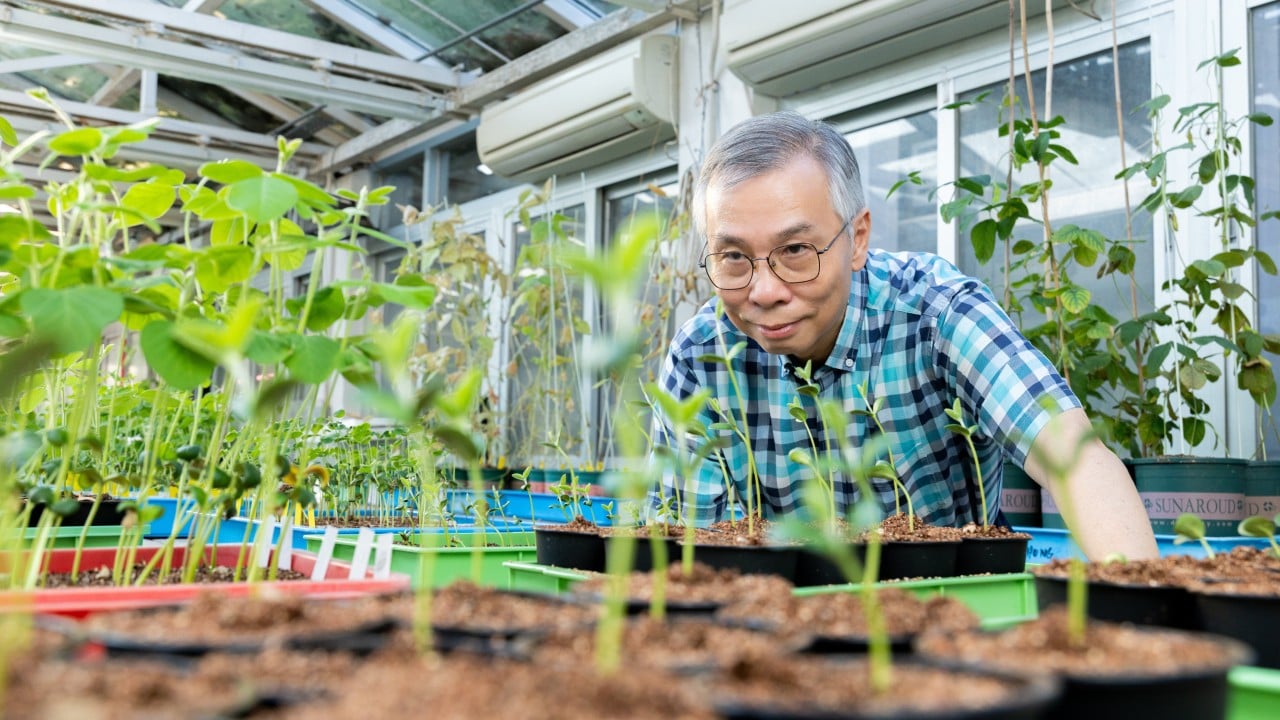
In 1997, Professor Lam Hon-ming returned to Hong Kong after completing postdoctoral work in the United States. He was immediately captivated by the question: how could science contribute to feeding both Hong Kong and the world? Soybeans offered a promising solution. Not only are they nutritious, but they also possess the ability to naturally replenish soil nitrogen levels, reducing dependency on chemical fertilizers.
Furthermore, certain soybean varieties can withstand drought and salinity. For the next three decades, Professor Lam dedicated himself to studying soybean genetics and creating strains suitable for less fertile land. "I chose agricultural research because it's important for everyone, even though there are relatively few people working in this field," Professor Lam explained.
"I grew up in a low-income family, so I understand the significance of food access and opportunities for those from disadvantaged backgrounds."
Professor Lam's research has transcended the laboratory and made a tangible impact on agriculture. In 2010, he and his collaborators published a study in the prestigious Nature Genetics journal, examining genetic diversity in wild and cultivated soybean genomes. Four years later, they reported the discovery of a gene associated with salt tolerance in wild soybean in the academic journal Nature Communications.
This discovery led to the breeding of non-genetically modified soybean varieties capable of thriving in challenging growing conditions. These varieties, developed in collaboration with mainland Chinese partners, have been approved for cultivation, including in Gansu province. Over the period from 2016 to 2024, the cultivated area of these three varieties surpassed 100,000 hectares (247,105 acres).
Professor Lam sees his work as a testament to what Hong Kong science can contribute to mainland agriculture.
Professor Lam's accolades have not gone unnoticed. At the 50th International Exhibition of Inventions Geneva in 2025, his soybean research earned him the Gold Medal with Congratulations of the Jury. However, Professor Lam emphasizes the importance of collaboration and localization. "You cannot simply come in and tell farmers what to do," he stressed.
"You have to work with them, understand their needs, and find solutions that are tailored to local conditions." This approach has also extended to international collaborations with researchers in Pakistan, Bangladesh, and Cambodia, as well as discussions in other parts of South Asia and Southeast Asia. Professor Lam acknowledges the importance of adapting varieties to local soil, temperatures, and growing seasons, often testing them over multiple seasons before determining their suitability.
The Professor attributes his success to the support of his family and various foundations. He credits his wife for her unwavering support during early field trials, while the Lo Kwee Seong Foundation and the Lee Hysan Foundation have provided financial backing for research and STEAM education initiatives. More recently, private investors have also become involved in his long-term projects.
Professor Lam's work has earned him a nomination in the innovation category of the Spirit of Hong Kong Awards, co-organized by Sino Group and the South China Morning Post. Looking ahead, Professor Lam is focused on ensuring that his years of research can continue beyond his own career. He aims to create the conditions for others to build upon his work, potentially through commercial applications in agriculture and food production.
As he reflects on his journey, Professor Lam states, "Now I want to create the conditions for others to take the work forward. If the next generation can carry it further than I did, that is enough for me."
Written by urgent.news from South China Morning Post's reporting — not their text. Machine-written — may contain errors; check the original before relying on it.
This story
This is one outlet's version. Read the fullest account.