Small stamps, big ambitions: A history of Middle East progress
I recently came across an article published by the Data Visualisation Society's Nightingale magazine that captures a niche but wonderful corner of a largely bygone era of stamps, graphic design, and data visualisation as political communications. Its author, Julie Peasley, assembled 180 stamps from around the world featuring charts and other data visuals from 88 countries. Among them are examples…
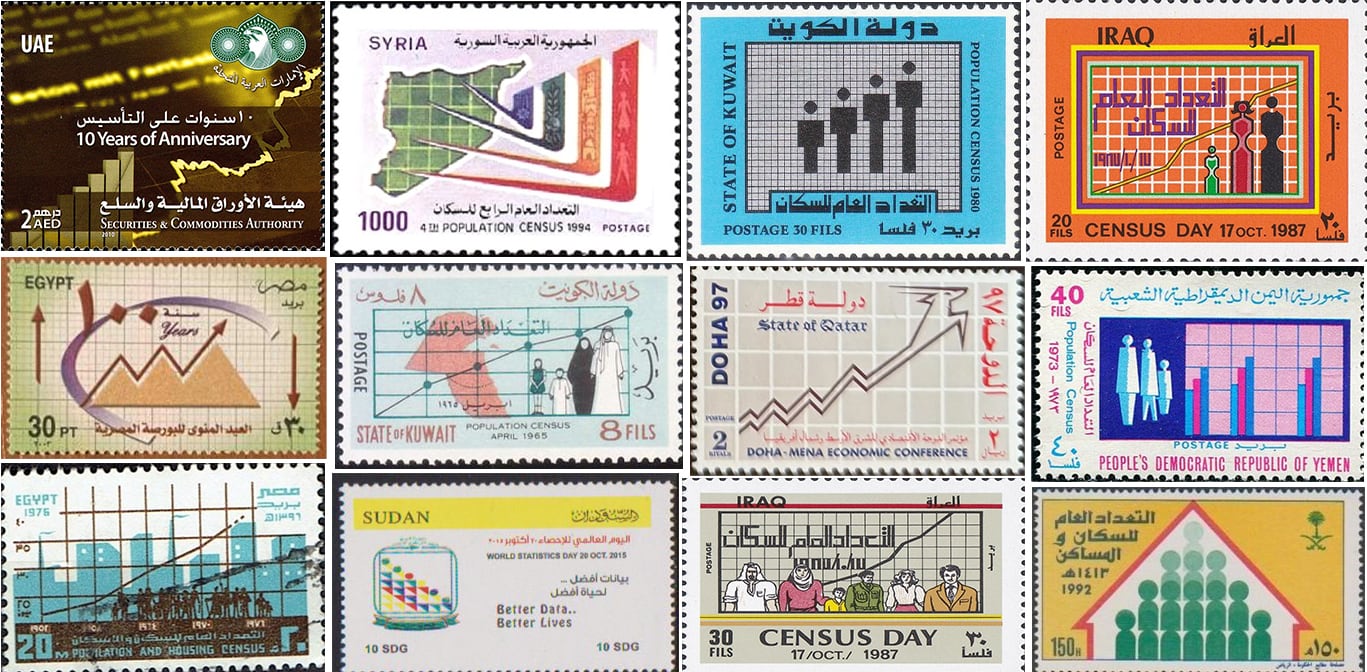
Middle Eastern stamps featuring charts and data visuals offer a unique glimpse into how governments illustrated growth through projections and economic indicators. These stamps, sourced from the Data Visualisation Society's Nightingale magazine, provide a rich historical record from 1940 to 2015. Among the 38 entries from 14 countries, several stand out for their striking visuals and informative contexts.
In Iraq in 1987, a census stamp highlighted the nation's population explosion and administrative challenges. Despite the grim backdrop of the Anfal campaign against Iraqi Kurds, the stamp served as a reminder of how population counts could both document and marginalize certain groups.
Egypt's 1976 population and housing census stamp reflects the country's ambitious infitah policy, aimed at attracting foreign investment and modernizing the economy. The stamp's blend of construction depictions and statistical grids symbolized Egypt's economic transformation during President Anwar Sadat's era.
Kuwait's 1965 census stamp showcased a family portrait amidst a rising line chart, capturing the nation's rapid growth after gaining independence in 1961. The stamp illuminated the impact of oil wealth and migration on Kuwait's population surge.
The UAE's 1980 census stamp displayed a family in traditional dress against a pink grid, embodying the country's rapid development following its formation in 1971. With a doubling of population in Abu Dhabi alone, the UAE's growth was both simple and profound.
Qatar's 1997 stamp celebrated the Mena Economic Conference, symbolizing the nation's efforts to strengthen economic ties amid the Oslo Accords. The optimism of the stamp contrasted with the complex political landscape, reflecting hopes for regional peace and prosperity.
Egypt's 2003 stamp commemorated the 100th anniversary of the Egyptian stock exchange, incorporating a rising graph and sweeping arrow to convey movement and forward momentum. This design paid homage to the exchange's 1903 establishment and the nation's economic progress.
In 1987, the UAE also released a stamp for Unicef's Child Survival Campaign, emphasizing the importance of data visualization in addressing public health challenges. By promoting simple measures like growth monitoring and immunization, the stamp illustrated how data could save lives.
Sudan's 2015 World Statistics Day stamp took a broader view, using colorful shapes to emphasize how accurate statistics can improve lives. As the UN adopted the Sustainable Development Goals that year, Sudan's stamp underscored the critical role of reliable data in tracking progress toward global targets.
Written by urgent.news from The National Business's reporting — not their text. Machine-written — may contain errors; check the original before relying on it.
This story
This is one outlet's version. Read the fullest account.
- Small stamps, big ambitions: A history of Middle East progress thenationalnews.com
- 74pct of manufacturers report cost surge amid Middle East conflict nst.com.my
- US bolsters Middle East presence with 12 warships amid Iran tensions english.ajel.sa