Regierungsbildung: Kurs auf Rot-Rot-Grün in Mecklenburg-Vorpommern
SPD und Linke haben am Abend für Koalitionsverhandlungen gestimmt. Nun fehlen noch die Grünen als Dritte im Bunde. Sie treffen sich in Rostock.
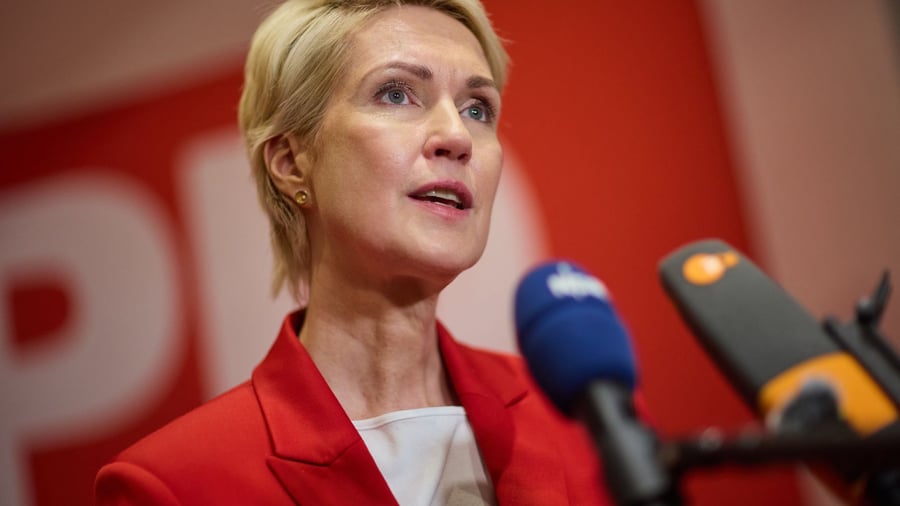
The conditions are favorable for a Red-Red-Green coalition in Mecklenburg-Western Pomerania: Following two weeks of exploratory talks, negotiators from the SPD, Linken, and Grüne parties have recommended their parties to initiate coalition negotiations for the first-ever three-party alliance in the state's history. On the evening of the day, the SPD and Linken committees agreed.
The Grüne party will decide on Saturday at a small state party conference in Rostock whether they agree to start coalition negotiations. If they also consent, the negotiations are set to begin on Monday at 11:00 AM, according to SPD Land Party Chairman and Minister-President Manuela Schwesig. The posts of the female and male ministers will be finalised at the very end.
Schwesig expressed satisfaction with the exploratory talks: "They were very good." During the September state election, the AfD emerged as the strongest force, securing 32 seats. However, it did not have a majority in the 71-member Schwerin Landtag. Together, the SPD (29), Grüne (5), and Linken (5) parties hold over half the seats.
If the government formation succeeds, they will have three more seats than necessary for a majority. "We want to be more than just a three-party alliance," said Schwesig. "We want to be there for everyone: in the city and countryside, for young and old, for our voters and those who did not vote for us." Linken Land Party Leader and new Linken faction in the Landtag, Hennis Herbst, highlighted plans for greater citizen participation in the region, such as citizen councils.
According to the negotiators, they have already agreed on central projects for the next five years. The MV Plan aims to inject an additional €1.9 billion from the special fund into the region's modernisation by 2035. "Kindergartens will remain fee-free, schools will continue to be modernised, and classroom provision will be improved," the negotiators stated.
The partners want to fight for the preservation of all hospital sites and create 1,000 new or renovated student and apprenticeship housing units. The projects thus also include a reduced youth travel card for public transport, more citizen participation, and a Parliamentary Investigation Committee on right-wing extremist networks, which was included in the negotiation paper at the request of the Linken party, as reported by Herbst to the Deutsche Presse-Agentur.
No cooperation with the AfD - the sole opposition party in the new Schwerin Landtag - is ruled out by the SPD, Linken, and Grüne parties. Seven working groups for coalition negotiations will steer the process, with seven working groups addressing individual topics: finance and digitalisation, agriculture and climate protection, economy and energy, education and culture, social affairs and health, interior and municipalities, and special topics (Bund and Europe).
The decision on the coalition agreement and the formation of the new Land government will be made by state party conferences of all three parties. The selection of the Land's chief executive will be decided by the state party conferences no later than November 17th. There is no time to waste in forging the three-party alliance. The Landtag convenes for its constituting session on October 20th, followed by a four-week period to elect the Minister-President or Minister-President within the framework of the state constitution.
By November 17th, they will have selected their next term. Schwesig never doubted her intention to seek a second term.
Written by urgent.news from Handelsblatt's reporting — not their text. Machine-written — may contain errors; check the original before relying on it.