Margaret Hamilton, scientist who worked on Nasa's Apollo program, dead at 90
American scientist Margaret Hamilton, who led development of the computer system used by Nasa’s Apollo lunar program, has died at the age of 90, her former employer said Wednesday. In a statement, the Massachusetts Institute of Technology called Hamilton, who taught at the prestigious university from 1959 to the mid-1970s, a “computing pioneer” and said she died on September 30. “To say Margaret…
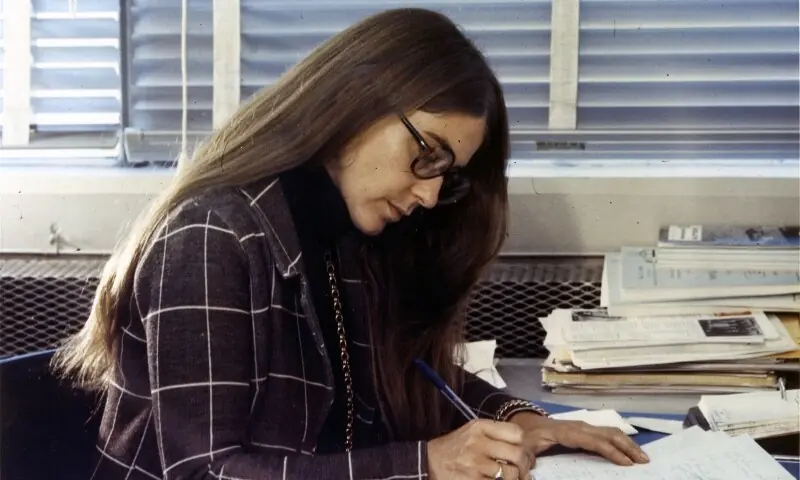
American computer scientist Margaret Hamilton, who played a pivotal role in the development of the computer system for NASA's Apollo lunar program, has passed away at the age of 90, according to MIT, her former employer. MIT described her as a "computing pioneer" and confirmed her death on September 30. Olivier de Weck, the Apollo Program Professor and interim head of the MIT Department of Aeronautics and Astronautics, emphasized Hamilton's pioneering spirit, stating that she was a "software engineer at a time when that field was in its infancy" and led a team in utilizing nascent technology to create one of humanity's most complex systems.
NASA's chief, Jared Isaacman, paid tribute to Hamilton on X, acknowledging her as "a pioneer whose work helped make Apollo and humanity's first journeys to the moon possible." Born in Indiana in 1936, Hamilton moved to Boston with her husband in 1959, where she began her career in meteorology before joining a lab in 1965 to develop software for the Apollo program.
She became the first programmer for the Apollo project at MIT and the first female programmer in the project. Hamilton's software interventions were crucial in making the onboard systems more robust and accident-resistant. Her contributions ensured that Apollo astronauts could safely land on the Moon and return home. She received the Presidential Medal of Freedom in 2016 for her achievements and published over 130 papers, starting her own software companies, Higher Order Software and Hamilton Technologies.
Rewritten by urgent.news; may contain errors — check the original.
Source: dawn.com