Indore Holkar College Workshop Puts Tribal Knowledge, Narmada Water Under Scientific Lens
Indore (Madhya Pradesh): A two-day workshop at Government Holkar Science College, Indore, with sponsorship from the Madhya Pradesh Biodiversity Board, put traditional Tribal knowledge, biodiversity conservation and the ecological health of the Narmada River under scientific scrutiny. Workshop coordinator Sanjay Vyas introduced the objectives, while principal Anamika Jain welcomed the guests and…
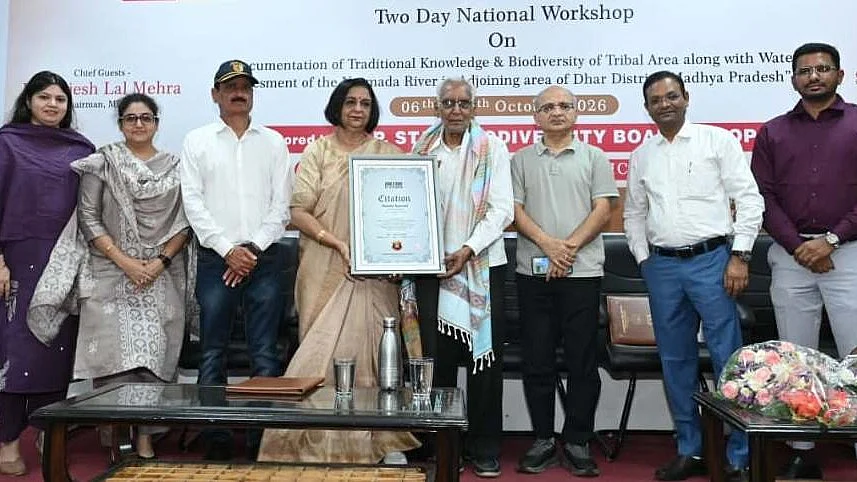
Indore's Government Holkar Science College recently hosted a two-day workshop sponsored by the Madhya Pradesh Biodiversity Board. The event aimed to examine traditional tribal knowledge, biodiversity conservation, and the ecological health of the Narmada River using scientific methods. Professor Sanjay Vyas, the workshop coordinator, introduced the objectives, while Principal Anamika Jain welcomed the guests and emphasized the importance of preserving tribal medicinal knowledge and biodiversity.
PC Dubey discussed the relationship between Maa Narmada and tribal communities, while Dr. Vejayanantham, the divisional forest officer of Dhar, shared insights on skill development and biodiversity conservation. Environmental expert Pradeep Chandanan presented on water and soil pollution, as well as research opportunities for students. Social worker and environmental thinker Shankar Agrawal, along with Tribal Bhil-Bhilala healers from Dhar, received special recognition.
On October 7, Microbiology, Botany, and Horticulture students from Holkar College, led by Vyas and faculty members, visited Maheshwar and Dhar. They collected water and soil samples from the Narmada River and documented local flora, as well as the role of tribal communities in biodiversity conservation. Students also toured the Ladvi nursery in Mandleshwar, where they received hands-on training from forest range officer Abhijeet Swami.
The collected samples will undergo scientific analysis at the college, with the findings submitted to the Madhya Pradesh Biodiversity Board. This research will contribute valuable data for future conservation efforts.
Written by urgent.news from Free Press Journal's reporting — not their text. Machine-written — may contain errors; check the original before relying on it.