Between Ararat and al-Judi: In search of Nuhs Ark
Could ancient geographical traditions concerning Judi and Ararat have overlapped in ways no longer obvious on a modern map?
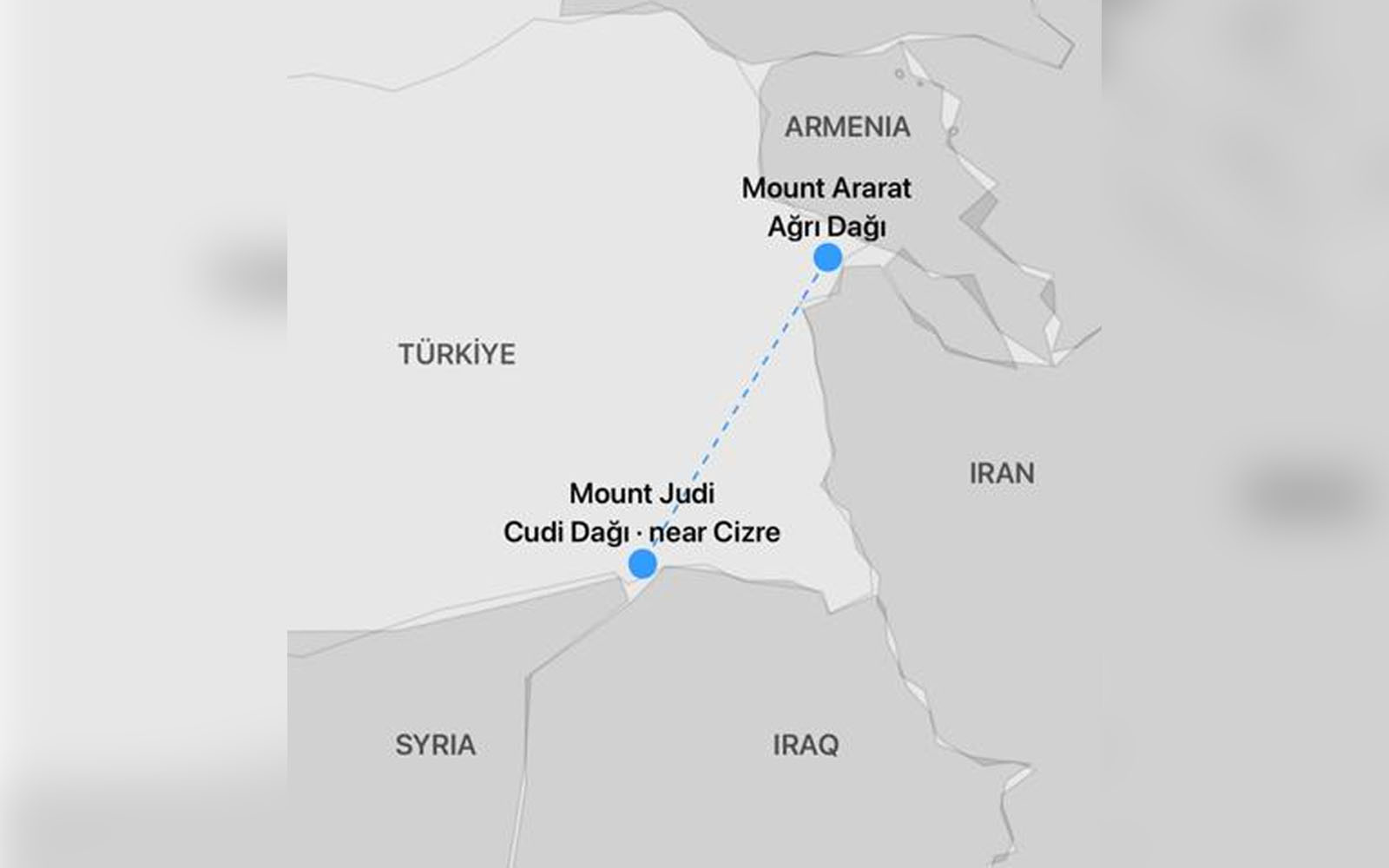
The story began with a photograph of a boat-shaped formation and a single question: If the Qur'an tells us that the Ark of Prophet Nuh (upon him be peace) landed on al-Judi, why do many modern reports direct attention to Mount Ararat instead? To explore this, I examined maps, compared the two mountains, and imagined an expedition using modern scanning technology.
Despite the distance between the two mountains, the question remained compelling. As a Muslim, my starting point was the Qur'an. In Surah Hud, verse 44, Allah states: "The Ark rested on Mount Judi." This name, al-Judi, therefore enters the inquiry from a religious source, not from a modern expedition or a desire to challenge popular belief.
Classical tafsir tradition provides explanations for this verse. Ibn Kathir records interpretations from early scholars, including Mujahid's identification of al-Judi as a mountain in al-Jazirah, in Upper Mesopotamia. These early views form the basis of understanding the verse but require careful assessment.
An essential distinction arises: the Qur'an names al-Judi, but pinpointing its exact location on a modern map requires different methods. Cudi Dağı, near Cizre in southeastern Turkey, is the mountain traditionally identified with al-Judi. However, presenting this identification as if the Qur'an supplied the modern coordinates is not accurate.
In contrast, Ararat is associated with the ancient region of Urartu. The connection to today's Mount Ararat developed through later traditions. Could there be historical and geographical links between the names Judi and Ararat that are no longer apparent on a modern map? This question requires investigation, examining similarities, differences, and possible connections rather than assuming they are unrelated.
For Muslims, the Qur'an remains the religious authority. Belief in Allah's books and messengers is part of the six articles of faith. While we may not equate the Injil (Gospel) or the Taurat (Torah) with their present forms, we do recognize earlier scripture as historically and textually relevant, albeit not possessing the same religious authority as the Qur'an.
My curiosity about these accounts arises within my Muslim faith. It necessitates careful description to avoid conflating all four holy texts with a single narrative of the Ark. Genesis offers a detailed account, the New Testament recalls Noah and his vessel, and Psalms may contain an allusion to the Flood. These are distinct references, and even as we explore them, we must remember the Qur'an's purpose is not to provide an excavation plan but to convey lessons about iman, tawhid, obedience, and Allah's power and mercy.
The narrative directs us to reflection and conduct, beyond seeking the precise location of the Ark. While historical investigation is warranted, we must also remember that remembering an event and pinpointing its exact location are separate tasks. Communities change, settlements disappear, and names evolve. Oral traditions, although valuable, must be examined alongside written and material evidence.
The boat-shaped formation at Durupınar, near Ararat, adds another layer of questions. Supporters of the Ark hypothesis cite scan patterns resembling corridors or chambers. However, these interpretations must be critically assessed within the broader context of historical and geographical inquiry.
Written by urgent.news from Free Malaysia Today's reporting — not their text. Machine-written — may contain errors; check the original before relying on it.