IIIT-H study caution doctors against relying entirely on AI for medical diagnosis
The researchers finds discrepancies in chest X-ray regions highlighted by vision-language models and radiologists
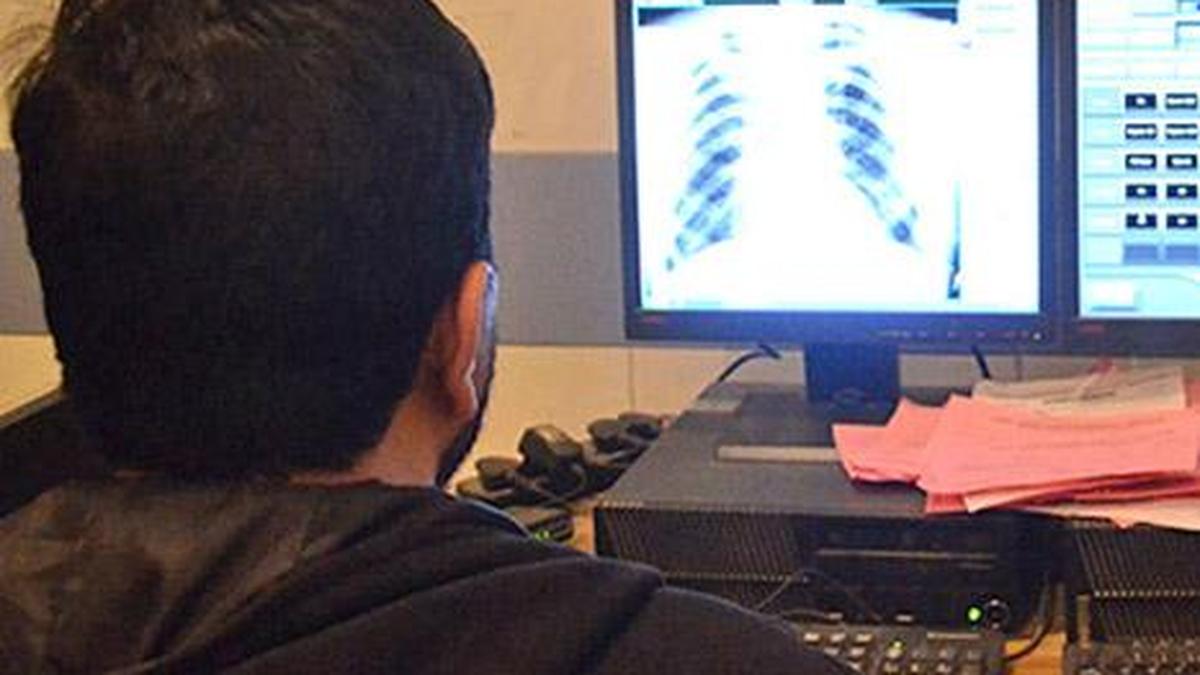
A recent study from the International Institute of Information Technology, Hyderabad (IIIT-H) has cautioned doctors against relying solely on artificial intelligence (AI) for interpreting medical images. The study, conducted by the Language Technologies Research Centre (LTRC) at IIIT-H, examined four vision-language models' ability to analyze chest X-rays.
The researchers discovered that the regions highlighted by AI models often did not match those identified by radiologists, indicating a need for independent assessment of AI-generated outputs by doctors. The study, led by Parameswari Krishnamurthy, aimed to determine if AI-generated heatmaps accurately represented the regions that radiologists would identify as disease-related.
The researchers questioned whether these visual indicators necessarily reflected the models' ability to identify the actual location of a disease. Lead investigator Syed Faizan emphasized the importance of evaluating AI tools from a clinical perspective, suggesting that a model focusing closely on a suspected abnormality might not provide all the information a radiologist needs, such as the extent of disease spread to surrounding areas.
The study, accepted for presentation at the upcoming MICCAI 2026 conference, highlights a gap in evaluating medical AI systems, as earlier research primarily focused on prediction and diagnostic accuracy rather than matching AI-highlighted regions with those identified by radiologists. The researchers also investigated the sensitivity of vision-language models to the wording of medical questions, finding that changes in phrasing could affect the models' responses, raising questions about the models' understanding of clinical queries.
The LTRC aims to apply natural language processing (NLP) to healthcare by using large language models and vision-language models to assist clinicians with tasks like documentation, report writing, and patient-doctor communication, aiming to reduce the time doctors spend on routine administrative work and enable them to focus more on clinical decision-making.
Rewritten by urgent.news; may contain errors — check the original.
Source: thehindu.com
This story
This is one outlet's version. Read the fullest account.