How Does Life Unfold? A Landscape Metaphor Comes Into Its Own.
C.H. Waddington’s powerful image of embryonic stem cells specializing on a rolling landscape has captivated biologists since the 1950s. Experimental data is finally confirming, and complicating, his visionary ideas. The post How Does Life Unfold? A Landscape Metaphor Comes Into Its Own. first appeared on Quanta Magazine
In the latter half of the 20th century, it appeared that biology had reached a point of near completion. The principles of evolution by natural selection and genetics offered explanations for how organisms change and adapt. These ideas were synthesized by biologist Julian Huxley in his 1942 book, effectively uniting the two fields.
However, not everyone found comfort in this approach. British biologist Conrad Hal Waddington, or "Wad," had doubts about the extent to which this focus on genes could explain the formation of the body's structures and features during embryonic development.
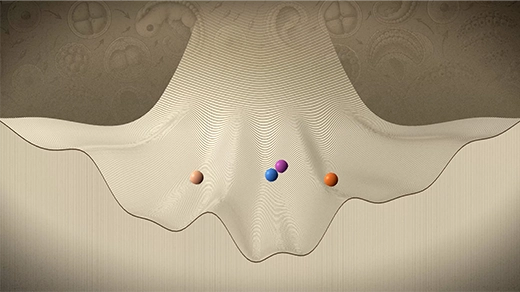
Around the same time that Huxley's modern synthesis emerged, Waddington proposed a unique perspective on the developmental process. He envisioned the journey of cells from their earliest embryonic stage to their mature forms as a landscape with hills and valleys, akin to river networks. At the peak of the highest hill, he imagined a ball representing a population of cells in their earliest embryonic form, known as stem or pluripotent cells.
As the ball rolls downhill through the landscape, it encounters branching points, or bifurcations, where the "gravity" of the system forces the ball to follow one path or another, leading to differentiation. Through a series of these branching events, cells specialize into particular types, each expressing a distinct set of genes.
This metaphorical landscape has proven to be an invaluable conceptual framework in developmental biology. The core ideas of progressive development, distinct cell states, defined fate decisions, and robustness still hold significant weight. However, the metaphor itself was more of a visual representation than a precise depiction of the biological process.
In recent years, researchers have begun to uncover the actual topography of cell-state spaces through experimental data from thousands of cells during embryonic development. These findings reveal that development is not merely a passive reading of genetic instructions, but a dynamic process in which clusters of cells collectively build themselves into an organism, shaping both the landscape they navigate and the genetic program they follow.
This new understanding of development through "real" landscapes is proving to be crucial for regenerative medicine and stem-cell engineering. By mapping out the topography of cell-state spaces, scientists can potentially guide cell populations towards desired outcomes with remarkable precision, rather than relying on trial and error. The metaphor Waddington devised has the potential to unlock new possibilities for understanding and reshaping the development of cells, tissues, and embryos.
Written by urgent.news from Quanta Magazine's reporting — not their text. Machine-written — may contain errors; check the original before relying on it.