Former CIA chief says AI could begin directing battlefield weapons by 2030
"Just four years from now, we will have autonomous systems, and I think we will have the beginning of autonomous systems of autonomous systems; we will have AI agents, so you'll have agentic AI staff officers," Petraeus told investor Finn Murphy on the Forecast2050 podcast. Read Entire Article
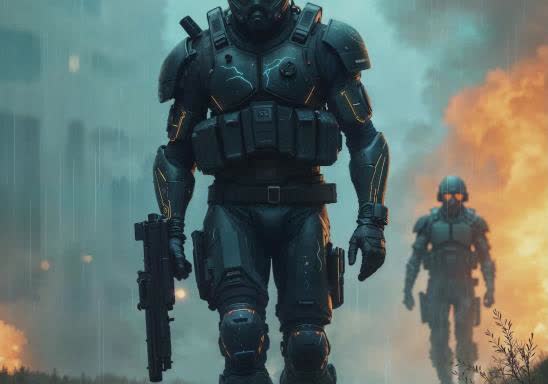
According to retired US General David Petraeus, artificial intelligence (AI) could begin directing networks of battlefield sensors and weapons as early as 2030. Petraeus predicts that military use of the technology will transition from data analysis to decision-making with minimal human input. He envisions AI staff officers and autonomous command systems coordinating multiple machines within a command network capable of gathering information and directing operations.
Petraeus believes that within four years, autonomous systems will emerge, leading to the development of "agentic AI staff officers." These AI agents would enable the creation of autonomous systems of autonomous systems, allowing AI to assume a broader role beyond controlling individual drones or processing information for human commanders. The software would facilitate operations across groups of machines.
Petraeus has previously suggested that autonomous systems could soon operate in platoon or battalion-sized units, sharing information and coordinating without human intervention. He refers to these AI staff officers as "generic artificial intelligence staff officers who will never sleep, never eat, never take a break."
The former CIA director also highlights the role of recursive learning in AI, where models utilize their own data and processes to enhance themselves. However, he does not elaborate on how military systems would implement or test this capability.
Petraeus anticipates an increased use of autonomous unmanned systems by Ukraine by the end of 2026. The primary consequence for drones would be a reduced need for pilots, allowing more aircraft to operate without a proportional increase in personnel.
Currently, the US military maintains that human operators retain ultimate control over weapon usage. While AI is being employed to analyze vast amounts of data, final decisions on whether to shoot or not, and when to shoot, remain with human operatives. Admiral Brad Cooper, head of US Central Command, confirms that AI is utilized to process large datasets but does not disclose specific applications.
Adopting autonomous warfare would necessitate changes within military institutions, according to Petraeus. He argues that the UK, with its smaller force, centralized defense ministry, and budget prioritization for unmanned systems, despite its smaller economy, could potentially assume a leadership role. In contrast, the US still faces certain institutional changes required for the transition.
Written by urgent.news from TechSpot's reporting — not their text. Machine-written — may contain errors; check the original before relying on it.