AI vs. the rest of the economy
Data: U.S. Bureau of Labor Statistics, FactSet; Chart: Axios/Matt Phillips; Note: Data center construction includes construction costs, such as labor, materials, profits of contractors, architectural and engineering work and miscellaneous overhead, interest and taxes. Does not include servers, racks, chips or memory. More and more, it seems as if there's the AI economy — and everything else. Why…
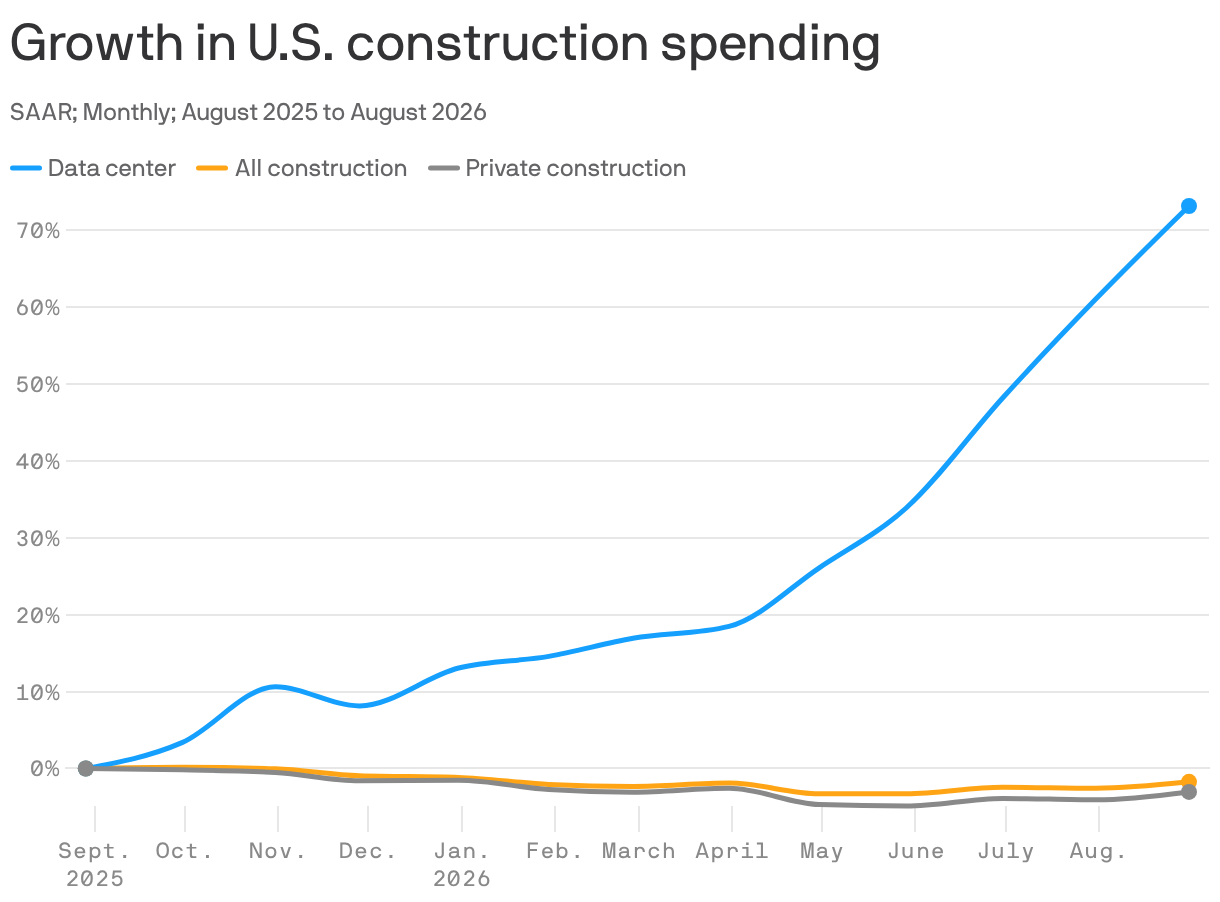
The U.S. economy is rapidly becoming intertwined with artificial intelligence, with implications that extend beyond the tech sector. Data from the U.S. Bureau of Labor Statistics and FactSet reveal a widening gap between the AI-driven economy and traditional sectors where most Americans work and live.
Construction spending in the U.S. has surged, particularly in areas related to AI, as shown by recent data. The same trend is evident in corporate bonds, with AI-related offerings accounting for more than half of net investment grade issuance through August, according to data from Apollo and Bloomberg. This data, visualized by Axios/Matt Phillips, underscores the increasing focus on AI in the market.
The impact of AI on tech stocks is also significant. Nvidia and other AI-related tech companies have seen their market values soar, with the technology sector now representing roughly 40% of the S&P 500's market capitalization. However, this figure underestimates AI's influence. When including hyperscalers Meta and Amazon, which are not part of the tech sector in the S&P 500, AI's share of the blue-chip index could reach a staggering 50%.
The growing dependence on AI raises concerns about the risks it brings, as the economy becomes more intertwined with this rapidly evolving technology.
Written by urgent.news from Axios's reporting — not their text. Machine-written — may contain errors; check the original before relying on it.