Chinese researchers make Arctic-to-Antarctic call using rival to Musk’s Starlink
Polar researchers have used a would-be Chinese rival to Elon Musk’s Starlink to make a satellite video call between the Arctic and Antarctic – the first publicly reported test of the Guowang constellation. The call highlights the growing capabilities of the country’s satellite constellations, according to state media. Beijing has been accelerating the development of its low-Earth-orbit…
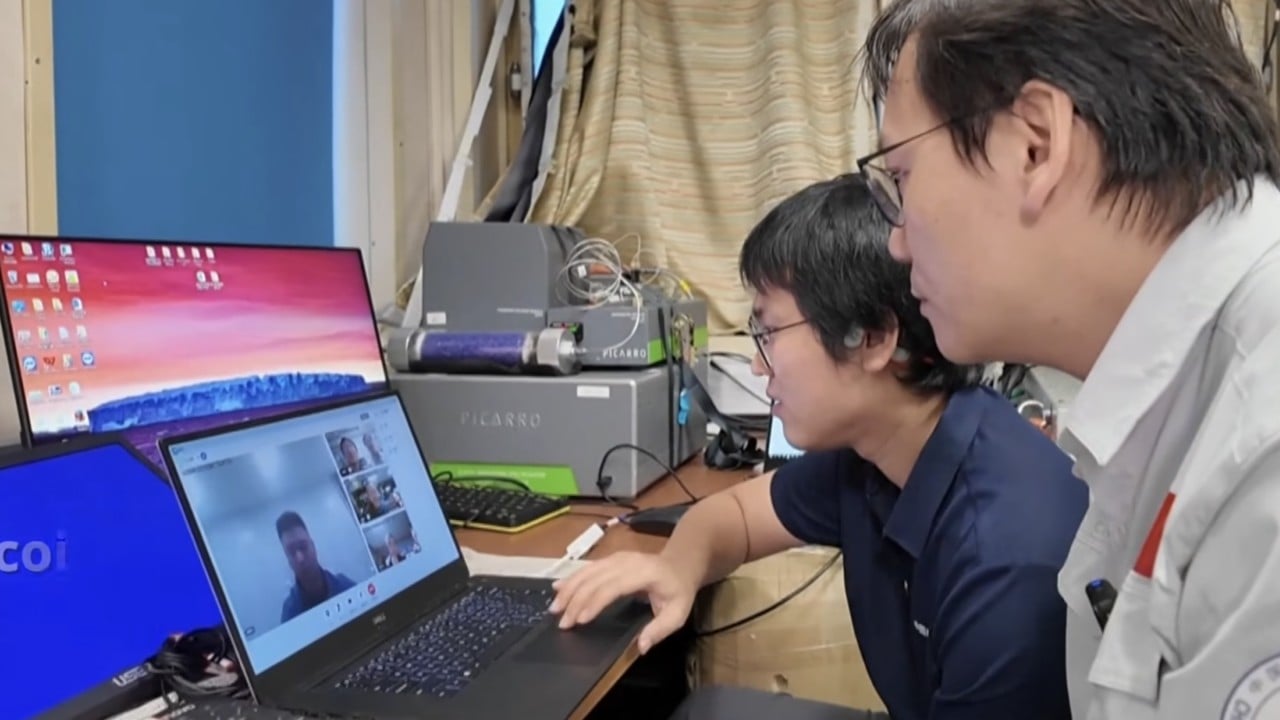
Researchers from China utilized a potential competitor to Elon Musk's Starlink to establish a satellite video call between the Arctic and Antarctic, marking the first public demonstration of the Guowang constellation. This development underscores China's rapid advancement in low-Earth-orbit satellite constellations, particularly in response to the military utility of Starlink during Russia's invasion of Ukraine.
In late September, this near-real-time communication took place between researchers aboard three Chinese Arctic expedition ships—the Xuelong, Jidi, and Tansuo-3—and personnel at China's Qinling Station in Antarctica. The delay was reported to be under one second.
Operated by the state-owned China Satellite Network Group, the Guowang constellation is still in its early stages. Initial satellite launches commenced in December 2024, with only around 180 satellites out of a planned 13,000 now in orbit. During the Arctic tests, researchers also evaluated Guowang's capacity to facilitate real-time communication between research vessels and China's National Marine Data and Information Service, transmitting data files and voyage logs.
This test was described as a significant stride toward China achieving independent and controlled communications in polar regions while ensuring data remains within the country and enhancing data security. The Guowang constellation achieved uplink and downlink speeds of approximately 30 megabits per second (Mbps) during these polar tests, which, while adequate for tactical communication and potential real-time control of unmanned systems, lag behind SpaceX's Starlink in terms of total data capacity and military-relevant features such as network resilience and jamming resistance.
According to Chinese online military observers, a 30Mbps satellite link is sufficient for most communication needs. China aims to have 400 Guowang satellites in orbit by the end of 2027, 1,300 by late 2029, and a total of 12,992 by 2035. The network also competes with China's Qianfan constellation, which, as of August 2024, had 256 satellites in orbit and aims to deploy 15,000 satellites by the end of 2024.
Written by urgent.news from South China Morning Post's reporting — not their text. Machine-written — may contain errors; check the original before relying on it.