Another satellite breakup raises concerns about space junk
An inactive Soviet weather satellite has broken apart above Earth. The satellite breakup has added tens of debris fragments to an already crowded low-Earth orbit. The post Another satellite breakup raises concerns about space junk first appeared on EarthSky .
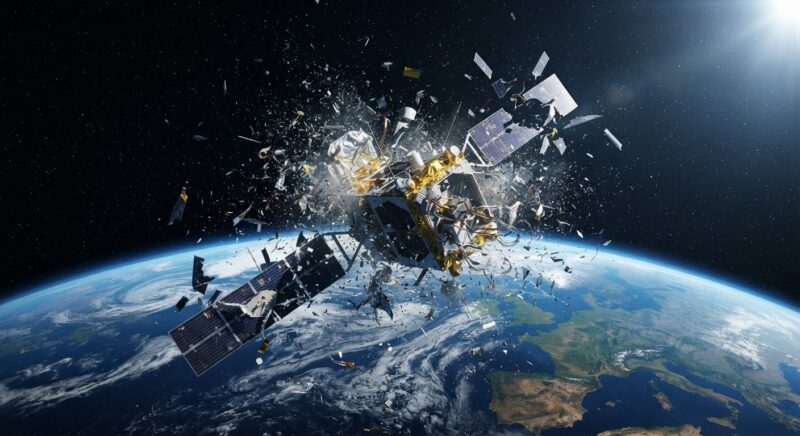
On October 5, 2026, an inactive Soviet weather satellite named Meteor 2-7 broke apart in low-Earth orbit, generating additional debris that could threaten other spacecraft. This event, detected by LeoLabs, a satellite tracking company, has raised concerns about the growing problem of space junk. Meteor 2-7, launched by the Soviet Union in 1981, was part of a series of weather satellites designed to observe clouds and gather atmospheric data.
Currently orbiting at an altitude of approximately 500 to 560 miles (800 to 900 km), the debris from the satellite's breakup poses a significant hazard due to the thin atmosphere at this altitude, which does not slow down objects quickly enough. NASA notes that debris at this altitude can remain in orbit for decades or even centuries, depending on its size and other factors.
Experts suggest that the satellite's breakup could be due to an internal failure or collision with another object. Regardless of the cause, the increasing frequency of such events has heightened concerns about the potential for a chain reaction known as the Kessler Syndrome, where collisions create more debris, leading to further collisions and making certain orbital regions increasingly hazardous.
Written by urgent.news from EarthSky's reporting — not their text. Machine-written — may contain errors; check the original before relying on it.