Scientists get a new clue to the origin of solar wind 'switchbacks'
Understanding why our nearest star does what it does
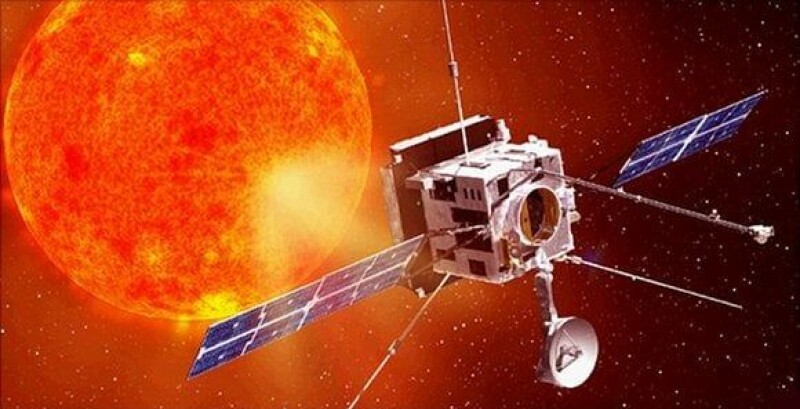
Scientists have obtained a crucial clue regarding the origin of solar wind switchbacks, thanks to the European Space Agency's Solar Orbiter mission. A switchback refers to a distinctive S-shaped kink in the magnetic field of the solar wind, a sudden and substantial deflection. In 2022, the spacecraft offered scientists a comprehensive view of the switchback's structure, though its source remained a topic of discussion.
The spacecraft's data initially indicated that the switchback might be near the Sun's surface; however, a recent flight through a switchback enabled scientists to pinpoint its origin. Jesse Coburn, a researcher from the French National Center for Scientific Research/Laboratoire de Phonétique et Phonologie, explained that the team was able to analyze rarely observed particles within a large switchback, which possessed clear signs of their solar origin.
These particles were detected using the Solar Wind Analyser instrument (SWA) on Solar Orbiter. The detection of these particles supports the theory of "interchange reconnection" as the process that forms switchbacks and, consequently, the solar wind. This theory posits that switchbacks arise when magnetic fields with varying properties interact.
Another theory emphasizes the role of waves and turbulence, which gain prominence after the switchback leaves the Sun. The findings from NASA's Solar Dynamics Observatory, combined with those from Solar Orbiter, provide insight into the Sun's ability to heat its atmosphere and propel solar wind particles into space. This information holds implications for predicting solar storms and their potential impact on Earth and space-based infrastructure.
Daniel Müller, ESA Project Scientist for Solar Orbiter, emphasized that understanding the Sun's dynamics is vital for safeguarding our planet from extreme space weather events.
Written by urgent.news from The Register Science's reporting — not their text. Machine-written — may contain errors; check the original before relying on it.
This story
This is one outlet's version. Read the fullest account.