Pakistan's terror monsters now wreak havoc in its own backyard: India at UN
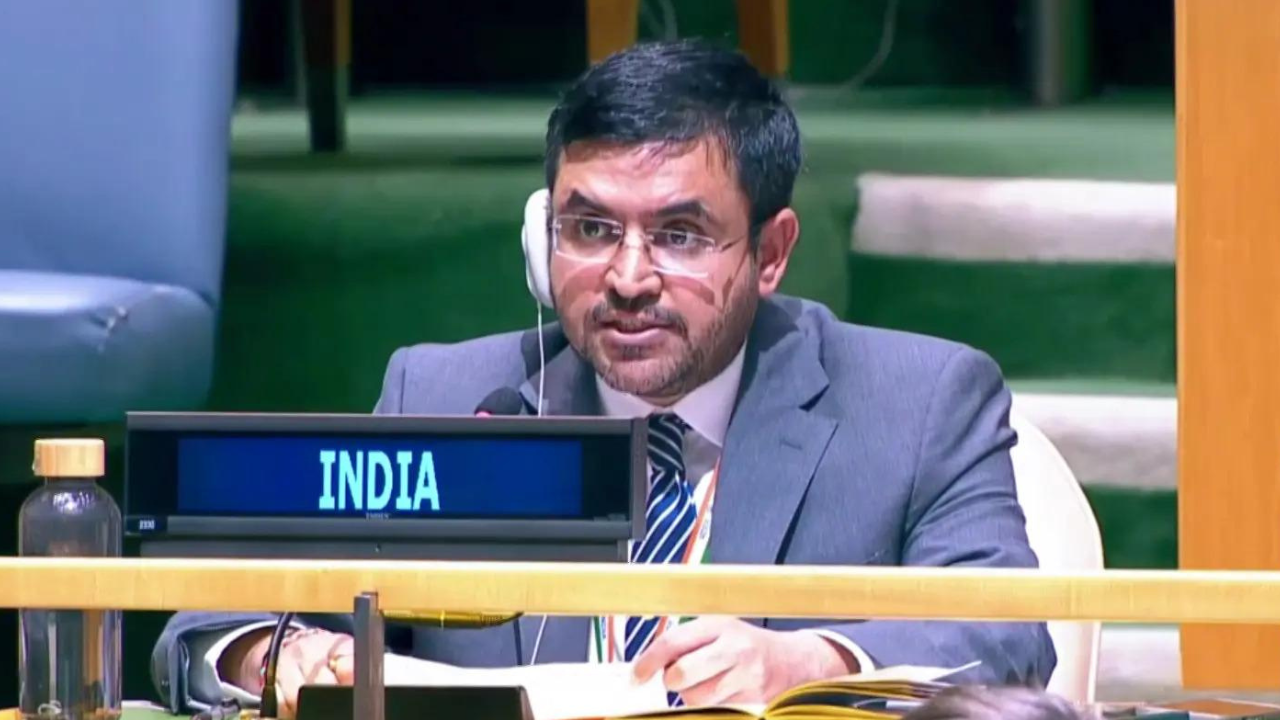
India leveraged the United Nations platform to leverage Pakistan's own words against it, asserting that the terror groups once fostered by Islamabad have now turned their aggression towards India itself. This position, emphasized by India's first secretary Raghoo Puri at the UN General Assembly's Sixth Committee, drew attention to Pakistan's shifting narrative regarding terrorism.
Puri contended that Pakistan has long presented itself as both a victim and a frontline state in the battle against terrorism, while concealing the fact that the very terror networks it once nurtured have shifted from attacking neighboring countries to striking at Pakistan. The Indian diplomat's remarks came in response to Pakistan's deputy Permanent Representative Usman Jadoon's criticism of India during the committee proceedings.
Puri highlighted recent statements by Punjab chief minister Maryam Nawaz, who noted that the threats to her province come primarily from neighboring Pakistani provinces rather than neighboring nations. Nawaz, who leads Pakistan's Punjab province, made these remarks in Lahore last month, emphasizing that the security concerns facing a province of 130 million people arise more from within than from abroad.
Puri also alluded to an interview conducted with Maryam Nawaz's father, former Pakistan Prime Minister Nawaz Sharif, in 2018, where he criticized militant groups operating from Pakistan and questioned whether they should be permitted to cross the border for attacks in India. Sharif contended that militant organizations are active, questioning whether they should be allowed to cross into India and inflict further casualties, such as the 150 deaths that occurred in Mumbai.
Puri criticized Pakistan's portrayal of the outcomes of Operation Sindoor, India's counterterrorism military operation targeting Pakistan, suggesting that bombed-out airfields and cratered runways do not constitute victory. He accused Pakistan of perpetuating false claims about the operation and contributing to a broader campaign of disinformation.
The Indian envoy also criticized Pakistan's persistent use of state-backed misinformation and psychological warfare, emphasizing the need to focus on actual counterterrorism efforts rather than narrative-building and spreading disinformation. Puri further criticized Pakistan's stance on minority rights, accusing Islamabad of allowing religious extremism to flourish by fostering cross-border terrorism.
He pointed out that the victims in the Pahalgam terror attack, which targeted tourists after asking about their religion, were not questioned about their political orientation. Puri argued that speaking of combating religious hatred while permitting conditions that enable its spread, particularly through cross-border terrorism, is deeply ironic.
He referenced Pakistan's claims regarding its action against Jaish-e-Mohammed chief Masood Azhar, who is designated as a terrorist by the UN, noting that Pakistan has increased the reward for his arrest. Puri questioned the sincerity of Pakistan's efforts to locate Azhar, suggesting that if the media can reach him and confirm his presence, the Pakistani state likely knows his whereabouts.
He also recalled Pakistan's previous assertions that Jaish-e-Mohammed was no longer active, highlighting the recurring nature of Pakistan's narrative.
Written by urgent.news from Times of India's reporting — not their text. Machine-written — may contain errors; check the original before relying on it.