Our Ancient Ancestors’ Lost Habitat Revealed by 700,000-Year-Old Elephant’s Tooth
An elephant’s tooth never forgets The post Our Ancient Ancestors’ Lost Habitat Revealed by 700,000-Year-Old Elephant’s Tooth appeared first on Nautilus .
Around a million years ago, the narrow land bridge between Africa and Eurasia, known as the Levant, served as a bustling corridor for ancient hominins. Among these early humans were likely Homo erectus and Homo heidelbergensis, who inhabited the region. A recent discovery may shed new light on the ancient habitat of these mysterious ancestors.
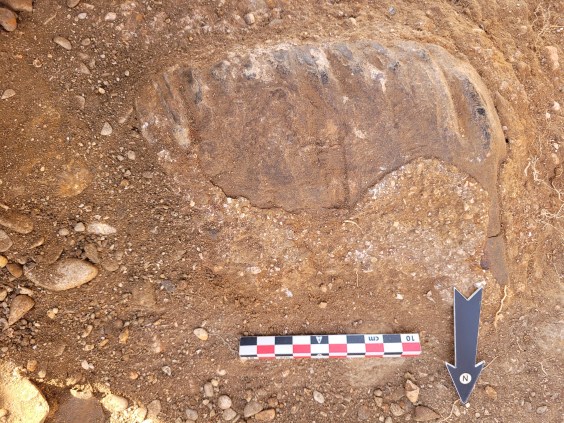
An 700,000-year-old elephant tooth, along with tusk fragments and basalt hand axes, was unearthed in the Daughters of Jacob Bridge region, located in the Hula Valley of Israel. Researchers from Haifa University conducted advanced analyses on the tooth using CT scans, 3D modeling, and isotopic examination. The results, published in Quaternary Science Reviews, suggest that the tooth belonged to an extinct straight-tusked elephant (Palaeoloxodon antiquus), one of the largest mammals ever to exist.
Carbon isotopes within the tooth indicate the elephant lived in a region with abundant water resources, while microwear patterns suggest its diet consisted of vegetation found in woodlands and river environments. Pollen grains surrounding the tooth revealed the presence of aquatic plants, reeds, and willows. Taken together, these findings paint a vivid picture of a verdant landscape filled with woodlands and marshes - a perfect habitat for both ancient hominins and elephants.
According to study author Gonen Sharon of Tel-Hai University of Kiryat Shmona, "The availability of water, vegetation, and animal resources shaped where humans and wildlife could survive." The wetlands, rivers, and woodlands of the Hula Valley provided a unique opportunity to understand the ecological conditions that supported both animal populations and human communities nearly 700,000 years ago.
Written by urgent.news from Nautilus's reporting — not their text. Machine-written — may contain errors; check the original before relying on it.
This story
This is one outlet's version. Read the fullest account.