NASA’s SPHEREx Telescope Sees Menagerie of Brown Dwarfs
NASA’s SPHEREx (Spectro-Photometer for the History of the Universe, Epoch of Reionization, and Ices Explorer) space telescope is shedding light on brown dwarfs, celestial objects that blur the line between stars and exoplanets. New findings published in The Astrophysical Journal show that these dark and cloudy worlds have chemically rich atmospheres not unlike the giant […] The post NASA’s…
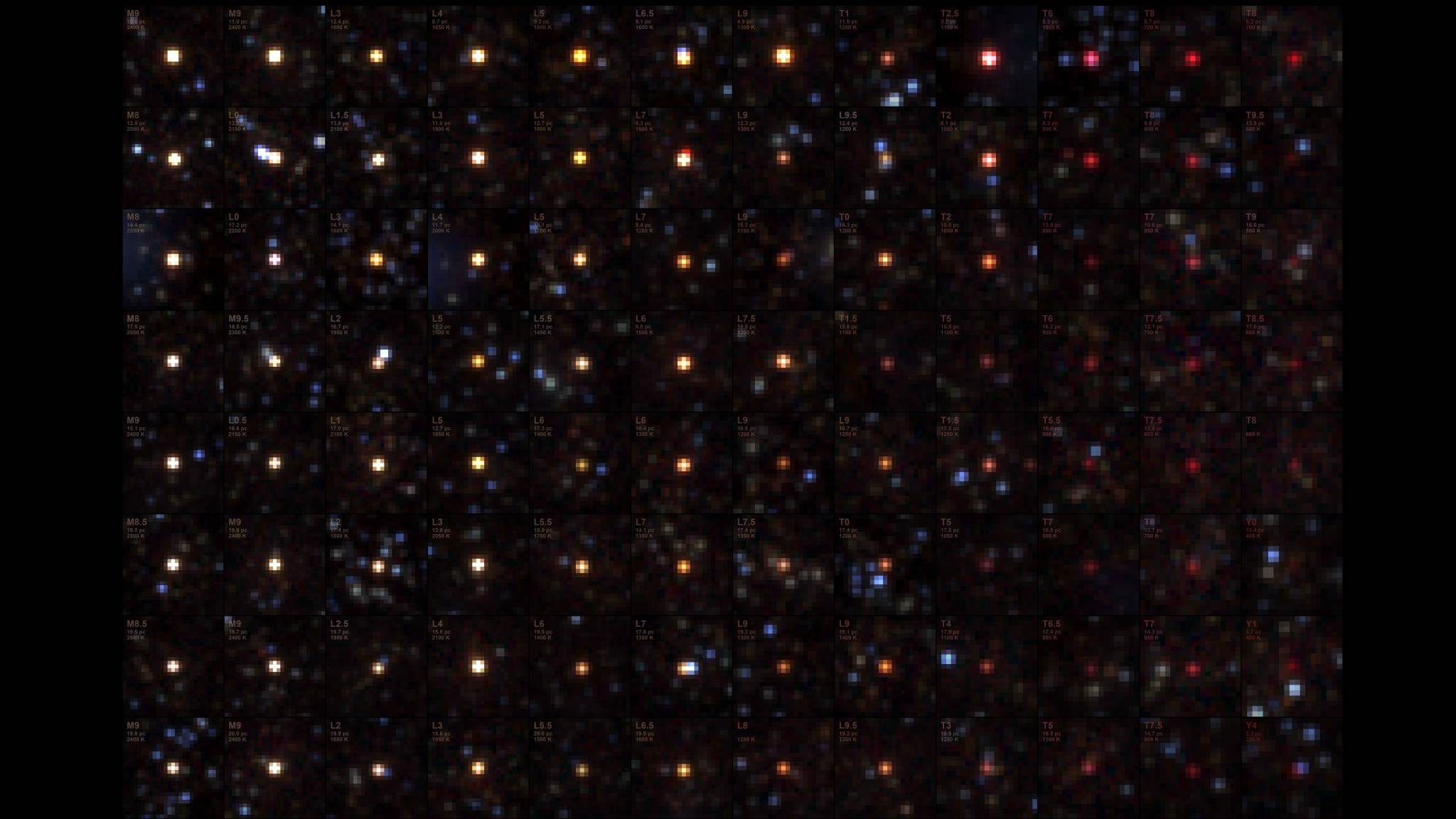
NASA's SPHEREx telescope is uncovering a variety of brown dwarfs while mapping the sky. This space telescope, launched in March 2025 and operated by the Jet Propulsion Laboratory in Southern California, identifies these celestial objects through its infrared sensors. Brown dwarfs, which straddle the line between stars and exoplanets, exhibit chemically rich atmospheres similar to the giant planets in our solar system.
Discovered in the 1990s, these dimly glowing worlds orbit in darkness, heated internally and independent of any host star. Lead author Zafar Rustamkulov describes them as "kind of goth" because they lack a host star for light. Only a few dozen brown dwarfs have been studied in depth using space-based telescopes, but NASA's SPHEREx aims to analyze thousands more.
With its ability to detect light in the infrared spectrum, SPHEREx can see through Earth's atmosphere's water absorption, revealing the deep red clouds of brown dwarfs across the sky. This unique capability allows the telescope to identify chemical components such as water, carbon dioxide, carbon monoxide, and methane in their atmospheres.
Rustamkulov and coauthor J. Davy Kirkpatrick hope to learn more about the variety of brown dwarfs as they continue to analyze the data collected by SPHEREx.
Written by urgent.news from NASA Science's reporting — not their text. Machine-written — may contain errors; check the original before relying on it.
This story
This is one outlet's version. Read the fullest account.