NASA’s SPHEREx Telescope Sees Menagerie of Brown Dwarfs
NASA’s SPHEREx (Spectro-Photometer for the History of the Universe, Epoch of Reionization, and Ices Explorer) space telescope is shedding light on brown dwarfs, celestial objects that blur the line between stars and exoplanets. New findings published in The Astrophysical Journal show that these dark and cloudy worlds have chemically rich atmospheres not unlike the giant […]
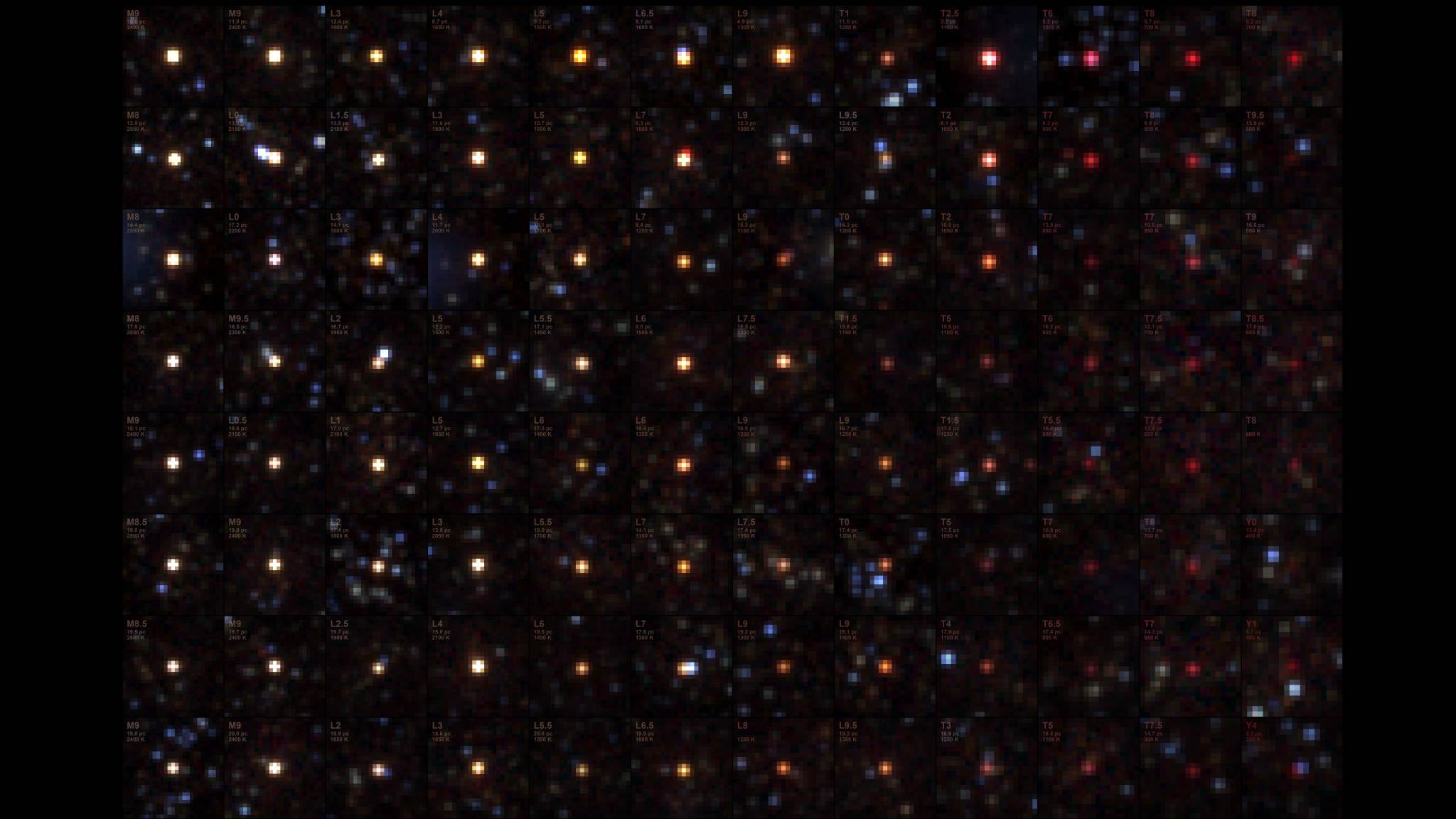
NASA's SPHEREx telescope has discovered a menagerie of brown dwarfs, celestial objects that blur the line between stars and exoplanets. These dimly glowing worlds, which form from collapsing gas clouds, share characteristics with Jupiter and Saturn but drift independently through space. A new study, published in The Astrophysical Journal, reveals that these objects have chemically rich atmospheres containing water, carbon dioxide, carbon monoxide, and methane, similar to the giant planets in our solar system.
First detected in the 1990s, just a few dozen brown dwarfs have been studied in detail using space-based telescopes. With the help of SPHEREx, scientists are analyzing thousands more of these elusive "dark wanderers." The telescope, launched in March 2025 and managed by NASA's Jet Propulsion Laboratory, observes the sky in 102 different colors, from visible red light to infrared wavelengths invisible to the human eye.
By measuring the brightness of brown dwarfs in these various colors, SPHEREx has uncovered the chemical compositions of their atmospheres. Researchers hope that studying more brown dwarfs will shed light on their formation, storminess, and evolutionary processes. As SPHEREx continues to map the universe, it is also searching for signs of life by detecting chemicals essential to biology, such as water and ice, which could one day seed distant worlds.
Written by urgent.news from NASA's reporting — not their text. Machine-written — may contain errors; check the original before relying on it.