Mercury lost its crown, and isn’t our Solar System’s hottest planet
In terms of power, the only body of note in the Solar System is the Sun. Planets, in general, reflect, absorb, and re-radiate energy emitted by their parent stars, and the Sun is the only parent star any of the planets have here in our Solar System. To an excellent approximation, the Sun keeps not only Earth, but all the planets at a temperature well above what they’d be without it, which is just…
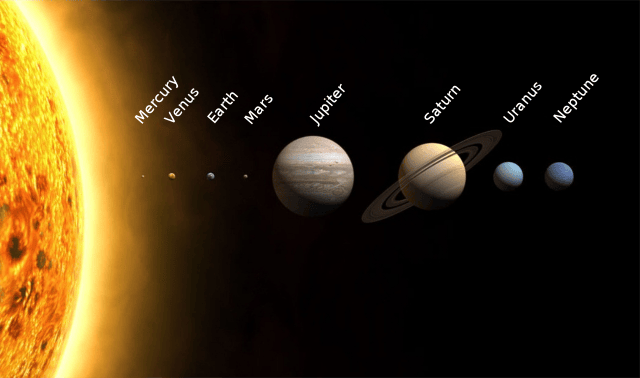
Mercury has relinquished its title as the Solar System's hottest planet, with Venus now taking the crown. The Sun, as the only parent star in our Solar System, provides the primary heat source for all planets. Proximity to the Sun does contribute to a planet's temperature, but it is not the sole determinant. Venus, for instance, maintains a consistent daytime temperature between 440-480 °C (820-900 °F), which is consistently higher than Mercury's peak temperature of 800 °F (427 °C) during the day.
This is primarily due to Venus's higher albedo, indicating that it reflects more sunlight than Mercury, which absorbs a greater portion of the incoming solar radiation. Mercury's low albedo, combined with its close proximity to the Sun, results in its extreme temperature fluctuations between 100 Kelvin (−173 °C / −280 °F) at night to 700 Kelvin (427 °C / 800 °F) at its hottest.
Written by urgent.news from Big Think's reporting — not their text. Machine-written — may contain errors; check the original before relying on it.