Life in the Skies Links Ecosystems Near and Far. It Deserves More Attention.
Our understanding of Earth’s biology and its responses to environmental change is limited by an incomplete picture of the planet’s dynamic aerobiome.
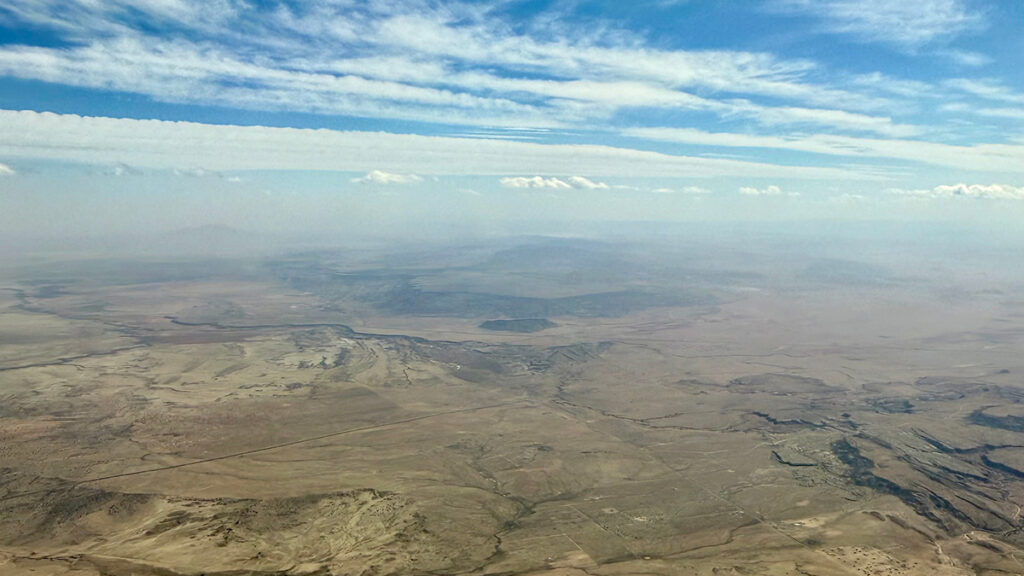
Life in the skies is intricately linked to ecosystems near and far, a concept that warrants greater attention. The atmosphere, much like Earth's surface and soils, functions as an ecologically active system. Turbulent winds, clouds, pollutants, nutrients, ultraviolet light exposure, and more intertwine to redistribute microbes and influence numerous processes.
This dynamic environment supports a complex community of biological particles, collectively termed the aerobiome, which includes microbes, viruses, fungi, pollen, allergens, and other organisms dispersed through the air.
A hypothesized "bioprecipitation feedback cycle" illustrates how vegetated landscapes emit bioaerosols that act as atmospheric ice nuclei, triggering the formation of rain or snow. This precipitation, in turn, enhances the growth of vegetation and associated microbes, demonstrating the interconnectedness of terrestrial and atmospheric systems. Long-range dust transport also plays a role by depositing nutrients to distant ecosystems, although the ecological roles of microbes transported with the dust remain largely unclear.
Despite advancements in understanding these processes over the past decades, a comprehensive holistic approach is still needed. A 2025 consensus report from the National Academies of Sciences, Engineering, and Medicine has called for the integration of tools, infrastructure, and workforce to support a new framework known as Continental-Scale Biology (CSB).
This framework aims to address urgent challenges such as declining biodiversity, changing climate, emerging infectious diseases, and food security. However, the report underrepresents the crucial role of the aerobiome, a key component of ecosystem interconnectivity.
The aerobiome, comprising biological particles in the air, serves as a dynamic Earth subsystem that bridges near and distant systems through the exchange of biological materials. However, our understanding of the aerobiome remains limited, particularly in terms of mapping and predicting its composition and roles in Earth system functioning. Current strategies for studying the aerobiome are inadequate, with limited methods for measuring and monitoring bioaerosol presence and behavior in both indoor and outdoor environments.
Improving our understanding of the aerobiome is essential for predicting its responses to and influences on natural and anthropogenic processes. While significant strides have been made in characterizing microbial populations in the environment using modern molecular analysis techniques like metagenomics and metatranscriptomics, the study of the aerobiome lags behind.
The atmosphere's ultralow biomass and unique sampling challenges require innovative approaches and standardized data collection methods. Nonetheless, the momentum for advancing our knowledge of the aerobiome is growing, with the potential to significantly enhance our understanding of Earth's biology and its responses to various processes.
Written by urgent.news from Eos's reporting — not their text. Machine-written — may contain errors; check the original before relying on it.