Kualiti udara: JAS lapor hasil pemantauan stesen, platform lain guna sumber berbeza
IPU Malaysia merupakan bacaan purata yang dilaporkan setiap jam, hasil pemantauan stesen pengawasan kualiti udara berdasarkan standard antarabangsa.
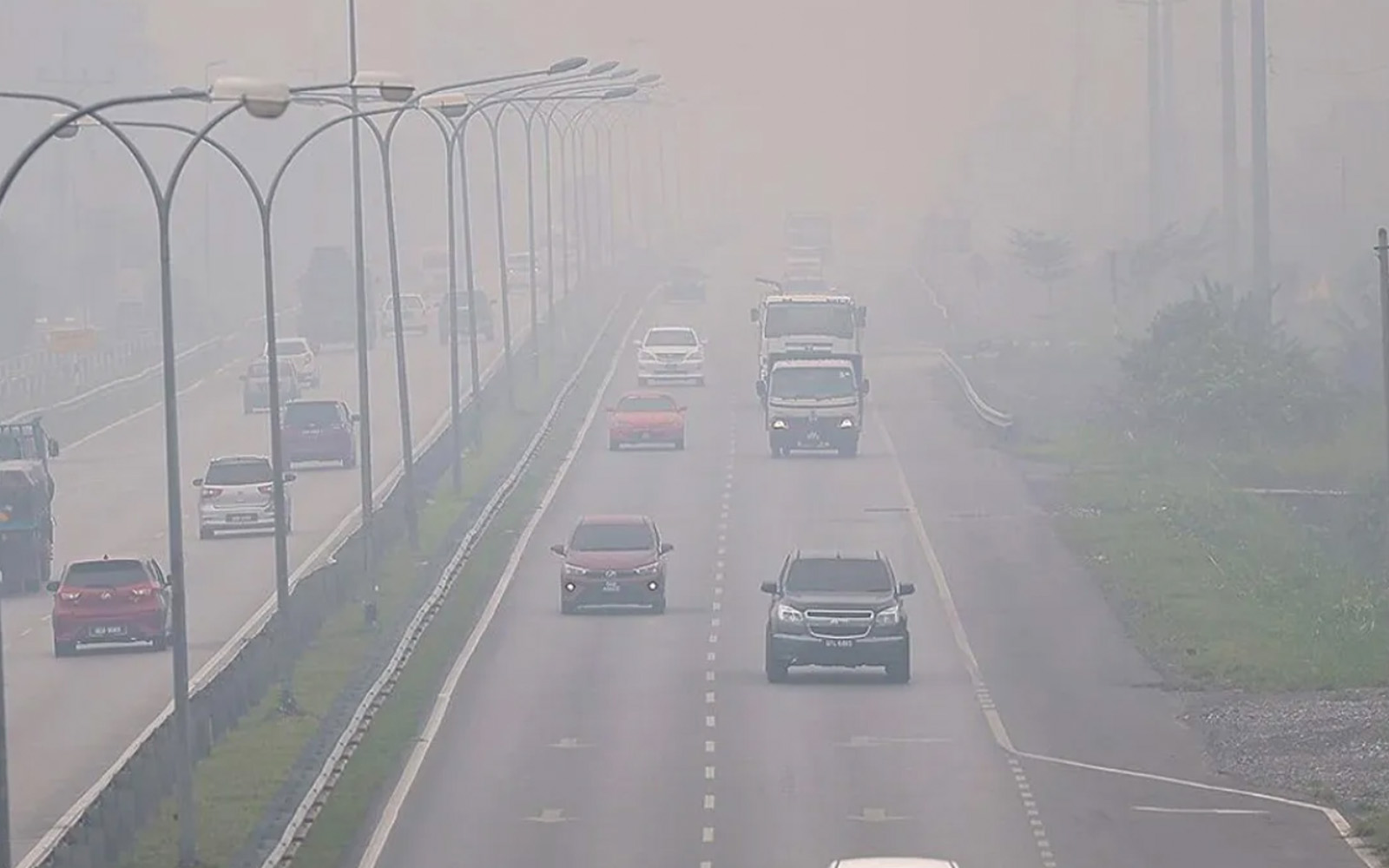
Malaysia's Air Quality Index (AQI) and PM2.5 values from two different platforms cannot be directly compared using the numbers alone, according to the Malaysia Environment Ministry (JAS). The agency advises the public to rely on JAS's official sources, which monitor air quality through 68 air quality monitoring stations using international standards and guidelines.
JAS states that sometimes the AQI numbers displayed on unofficial websites or free apps can be higher than those from JAS's Indicators of Air Pollutants (IPU) Malaysia. This difference is usually not indicative of a discrepancy or reduced pollution levels, but rather arises due to variations in AQI and IPU Malaysia's calculation scales, methods, thresholds, time averages, updates, and data sources.
IPU Malaysia is a time-weighted average reported every hour, calculated using sub-indices for six main air pollutants: ground-level ozone, carbon monoxide, nitrogen dioxide, sulfur dioxide, fine particulate matter less than 10 microns, and fine particulate matter less than 2.5 microns. JAS explains that the concentrations of these six pollutants are monitored continuously for 24 hours a day to obtain a reference value for determining IPU readings.
In contrast, some international platforms may use scales like the US Environmental Protection Agency's AQI, along with different data sources such as low-cost sensors, modeling estimates, or satellite data, the agency notes. JAS emphasizes that satellite data measures the concentration of particles in the atmosphere and not the true air quality at ground level, which is what humans breathe.
Satellite data also has certain limitations, including the potential for misinterpretation of mist or fog as smoke. Therefore, accurate comparisons of AQI and IPU Malaysia numbers from different platforms require taking into account the same location, measurement time, specific pollutant concentrations, and the calculation methods used.
Consequently, JAS advises the public to obtain air quality information from JAS's official sources, such as the Air Pollutant Index Management System (APIMS) or the MyJAS EQMS app, to ensure the information used is accurate, consistent, and suitable for making daily activity decisions and protecting health.
Written by urgent.news from Free Malaysia Today's reporting — not their text. Machine-written — may contain errors; check the original before relying on it.
Also reported by 1 other outlet
- Kualiti udara: JAS lapor hasil pemantauan stesen, platform lain guna sumber berbeza freemalaysiatoday.com